


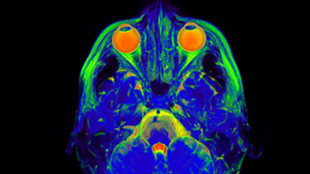
 FLICKR, LIZ HENRYThomas Insel, the Director of the National Institute of Mental Health (NIMH), wrote a blog post last week (April 29) stating that the agency will be transitioning away from using the Diagnostic and Statistical Manual of Mental Disorders, otherwise known as the DSM, in allocating its research funding. Rather, the agency will be working on developing new categories for research based on neural circuits and biomarkers.
“While DSM has been described as a ‘Bible’ for the field, it is, at best, a dictionary, creating a set of labels and defining each,” Insel wrote. The DSM gives mental health professionals a language to talk about mental illness, but it is not based on “any objective laboratory measure,” he added. This month, a new edition of the manual, called the DSM-5, will be released amid ongoing controversy about some of the changes from its previous version.
To better classify mental disease, the NIMH has started the Research Domain Criteria (RDoC) project, which Insel said will “transform diagnosis by incorporating genetics, imaging, cognitive science, and other levels of information to lay the foundation for a new classification system.”
However, biological biomarkers for mental disease ...












