Phoseon UV Products Aid in the Fight Against Pathogens

Solid state technology for virus inactivation and pathogen research

Written byPhoseon Technology
| 1 min read

Register for free to listen to this article
Listen with Speechify
0:00
1:00
Share

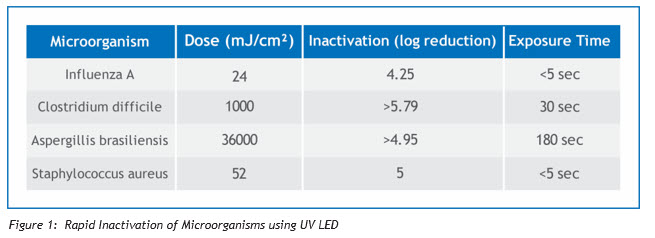
Phoseon’s KeyPro™ family of products uses high-intensity, deep ultraviolet light to disinfect and decontaminate laboratory equipment and surfaces. Independent testing has shown efficacy of KeyPro against viruses, bacteria, fungi, and biomolecules like ribonuclease. KeyPro successfully inactivates influenza A virus in less than 5 seconds (see figure 1). Novel Coronavirus and Influenza A are both enveloped RNA viruses and may be susceptible to UV inactivation under similar conditions.

For vaccine development, researchers routinely need to work with inactivated viruses that have structures preserved. Preliminary results indicate that some viruses can be completely or partially inactivated with UV LED technology while retaining recognition features and antibody function. Retaining recognition features is challenging with existing methods of virus inactivation.
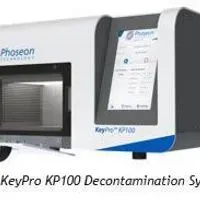
Phoseon KeyPro™ KP100 decontamination system is a stand-alone system where samples can be exposed to a controlled intensity and dose of UVC radiation (278nm), providing validated, simple and fast decontamination of microplates and preparatory ...
Interested in reading more?

Become a Member of

The Scientist Logo
Receive full access to more than 35 years of archives, as well as TS Digest, digital editions of The Scientist, feature stories, and much more!
Already a member? Login Here
Share
Illustration of a developing fetus surrounded by a clear fluid with a subtle yellow tinge, representing amniotic fluid.
January 2026, Issue 1

What Is the Amniotic Fluid Composed of?

The liquid world of fetal development provides a rich source of nutrition and protection tailored to meet the needs of the growing fetus.

View this Issue
Skip the Wait for Protein Stability Data with Aunty

Skip the Wait for Protein Stability Data with Aunty

Unchained Labs
Graphic of three DNA helices in various colors

An Automated DNA-to-Data Framework for Production-Scale Sequencing

illumina
Exploring Cellular Organization with Spatial Proteomics

Exploring Cellular Organization with Spatial Proteomics

Abstract illustration of spheres with multiple layers, representing endoderm, ectoderm, and mesoderm derived organoids

Organoid Origins and How to Grow Them

Thermo Fisher Logo

Products

nuclera logo

Nuclera eProtein Discovery System installed at leading Universities in Taiwan

Brandtech Logo

BRANDTECH Scientific Introduces the Transferpette® pro Micropipette: A New Twist on Comfort and Control

Biotium Logo

Biotium Launches GlycoLiner™ Cell Surface Glycoprotein Labeling Kits for Rapid and Selective Cell Surface Imaging

Colorful abstract spiral dot pattern on a black background

Thermo Scientific X and S Series General Purpose Centrifuges

Thermo Fisher Logo






