


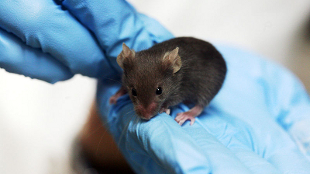
 WIKIMEDIA, RAMACranial radiation therapy, or radiation targeted to the brain, has been an effective means of decreasing the size of brain tumors. However, the treatment is known to cause neurological dysfunction later in life, though the exact mechanisms underlying the damage have not been clear. Research published Monday (July 15) in the Proceedings of the National Academy of Sciences, demonstrates that the life-saving therapy compromises the structure of neurons in mice.
Vipan Parihar and Charles Limoli, oncologists at the University of California, Irvine, observed a significant reduction in the complexity of dendrites—the branch-like structures on neurons that receive input from other neurons—following treatment with a low dose of radiation—equivalent to a dose used for children—or a dose 10 times higher. Dendritic branching, as well as dendritic length and area, were reduced by more than 50 percent for both doses.
The radiation therapy resulted in a 20 to 35 percent reduction in the number of neurons in the hippocampus and a 40 to 70 percent reduction in the density of dendritic spines—knob-like structures that make synaptic connections with axons of other neurons. Immature dendritic proto-spines were reduced in number 40 percent 10 days after the high dose. ...













