Stem Cell Trials in Peril?

The only US firm with an ongoing embryonic stem cell therapy clinical trial is in financial and legal hot water.

Written byKerry Grens
| 2 min read

Register for free to listen to this article
Listen with Speechify
0:00
2:00

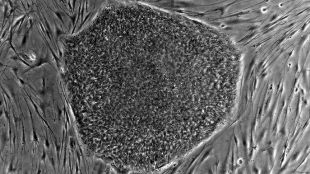
WIKIMEDIA, LD711The Massachusetts-based firm Advanced Cell Technology has been leading the way in the somewhat fraught pursuit of developing therapies using human embryonic stem cells. After the 2010 failure of the stem cell company Geron, subsequent progress in clinical studies from Advanced Cell Technology offered a glimmer of hope. But a news report from Nature this week tossed cold water on any excitement—apparently, the company is in trouble with the U.S. Securities and Exchange Commission (SEC) and is running out of money.

“This is a very painful time for them,” Gregory Bonfiglio, a venture capitalist with Proteus Venture Partners in Portola Valley, California, told Nature.

Advanced Cell Technology is currently running three Phase I clinical trials for degenerative eye diseases. Although the company intends to start the next round of clinical trials later this year, Nature pointed out that the firm’s most recent quarterly report revealed that the its funds could dissipate this year.

Late in 2013, the company paid out $4 million to settle an SEC charge of selling stocks without registering them. Last week, Advanced Cell Technology’s CEO, Gary Rabin, stepped down. Rabin is the subject of an ongoing SEC investigation. And to make matters worse, the Wisconsin Alumni Research Foundation is suing Advanced Cell ...

Interested in reading more?

Become a Member of

The Scientist Logo
Receive full access to more than 35 years of archives, as well as TS Digest, digital editions of The Scientist, feature stories, and much more!
Already a member?
Add The Scientist as a preferred source on Google

Add The Scientist as a preferred Google source to see more of our trusted coverage.

Meet the Author

  • kerry grens

    Kerry served as The Scientist’s news director until 2021. Before joining The Scientist in 2013, she was a stringer for Reuters Health, the senior health and science reporter at WHYY in Philadelphia, and the health and science reporter at New Hampshire Public Radio. Kerry got her start in journalism as a AAAS Mass Media fellow at KUNC in Colorado. She has a master’s in biological sciences from Stanford University and a biology degree from Loyola University Chicago.

    View Full Profile

Related Topics

Related articles background image
The Scientist Digest cover September 2026
September 2026

Multiplex Microscopy Becomes Easier with Encoded Antibodies

A new system that enables researchers to uniquely tag monoclonal antibodies for use in microscopy could help simplify complex imaging studies.

View this Issue
Rethinking ALS Biomarkers: From Discovery to Clinical Impact

Rethinking ALS Biomarkers: From Discovery to Clinical Impact

Alamar Biosciences logo
Best Practices for qPCR Assay Design and Optimization

Best Practices for qPCR Assay Design and Optimization

Bio-Rad
Beyond the Basics: Strategies for Single-Cell and Spatial Transcriptomics Analysis

Beyond the Basics: Strategies for Single-Cell and Spatial Transcriptomics Analysis

bioxcell
Scientist reviewing cellular and molecular data on a computer in a laboratory.

Building Translation-Ready Biomarkers with Connected Workflows

Danaher Logo

Products

Closeup image of a multi channel pipette dispensing pink liquid into a 96-well plate.

The ASSIST PLUS pipetting robot for affordable workflow automation

Integra Logo
Single cells in suspension

Rapidly isolate primary cells and make uniform single-cell suspensions with Corning® Cell Strainers

Corning logo
Abstract image representing cell membranes linked together.

CellBrite® Steady Membrane Stain: Cell surface staining built for real-time imaging

Biotium
sino biological logo

Monod Bio Licenses AI-designed Protein Technologies to SignalChem Biotech for Custom Discovery Assays







