Study: Climate Change Threatens Hundreds of Mammal and Bird Species

An analysis of 130 studies reveals that the threat of global warming to wildlife has been underreported.

Written byDiana Kwon
| 1 min read

Register for free to listen to this article
Listen with Speechify
0:00
1:00
Share

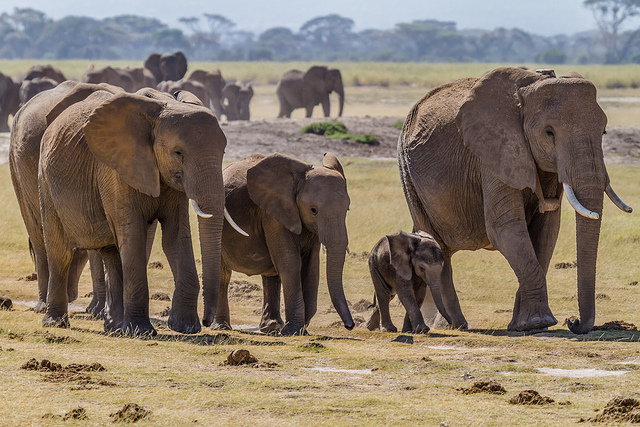
BENH LIEU SONG, FLICKR While scientists have long-known that climate change threatens wildlife, the magnitude of those effects have been underreported, according to a study published Monday (February 13) in Nature Climate Change.

International researchers reviewed 130 studies published between 1990 and 2015 that documented the effects of climate change on various species. Their analysis revealed that, among the animals listed as threatened by the International Union for the Conservation of Nature (IUCN), 47 percent of 873 terrestrial mammals and 23 percent of 1272 bird species were negatively affected by climate change. While the degree of harm to each species varied, they found that elephants, marsupials, primates, waterfowl, and birds living at high altitudes were hit the hardest. Many of these animals have specialized diets or live in habitats where the effects of global warming are difficult to escape.

Prior estimates only flagged around 7 percent of mammals and 4 percent of birds on IUCN’s list as threatened ...

Interested in reading more?

Become a Member of

The Scientist Logo
Receive full access to more than 35 years of archives, as well as TS Digest, digital editions of The Scientist, feature stories, and much more!
Already a member? Login Here

Related Topics

Meet the Author

  • Diana is a freelance science journalist who covers the life sciences, health, and academic life. She’s a regular contributor to The Scientist and her work has appeared in several other publications, including Scientific American, Knowable, and Quanta. Diana was a former intern at The Scientist and she holds a master’s degree in neuroscience from McGill University. She’s currently based in Berlin, Germany.

    View Full Profile
Share
Illustration of a developing fetus surrounded by a clear fluid with a subtle yellow tinge, representing amniotic fluid.
January 2026, Issue 1

What Is the Amniotic Fluid Composed of?

The liquid world of fetal development provides a rich source of nutrition and protection tailored to meet the needs of the growing fetus.

View this Issue
Redefining Immunology Through Advanced Technologies

Redefining Immunology Through Advanced Technologies

Ensuring Regulatory Compliance in AAV Manufacturing with Analytical Ultracentrifugation

Ensuring Regulatory Compliance in AAV Manufacturing with Analytical Ultracentrifugation

Beckman Coulter Logo
Skip the Wait for Protein Stability Data with Aunty

Skip the Wait for Protein Stability Data with Aunty

Unchained Labs
Graphic of three DNA helices in various colors

An Automated DNA-to-Data Framework for Production-Scale Sequencing

illumina

Products

nuclera logo

Nuclera eProtein Discovery System installed at leading Universities in Taiwan

Brandtech Logo

BRANDTECH Scientific Introduces the Transferpette® pro Micropipette: A New Twist on Comfort and Control

Biotium Logo

Biotium Launches GlycoLiner™ Cell Surface Glycoprotein Labeling Kits for Rapid and Selective Cell Surface Imaging

Colorful abstract spiral dot pattern on a black background

Thermo Scientific X and S Series General Purpose Centrifuges

Thermo Fisher Logo







