A brown dog stares at a spoon of peanut butter in front of its face with wide eyes.
| 3 min read
The reason dogs beg, sit, stay, and shake for peanut butter could be both evolutionarily wired and learned behavior.

taste

The drawing depicts two fruit flies near a plant from the genus Aristolochia. One fly perches on the plant's orange flower, while the other moves away from it. 

Flies’ Taste for Tumor-Fighting Compounds May Aid Drug Discovery

Stay Salty: Maternal Diet Affects an Offspring’s Neuronal Taste Circuit

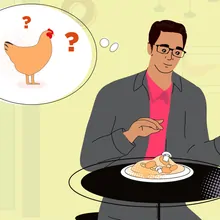
Cartoon illustration of John Gonzalez eating food and questioning if it is chicken

Why Does Everything Taste Like Chicken? 

Variety of sweeteners - Stevia, sugar, pollen and honey stock photo

How the Gut Differentiates Artificial Sweeteners from Sugars

Six primates eat leaves

Umami Taste Receptor Evolved with Primates’ Diets

Neurons for Taste Loosely Distributed in Mouse Gustatory Cortex

Loss of Smell, Taste May Be Reliable Predictor of COVID-19: Study

Proton Channel for Sensing Sour Taste Identified in Mice

Researchers Identify Gene Variants Linked to Synesthesia

Trending

A close-up image of a fly landing on a dessert

What Happens When a Fly Lands on Your Food? 

Image of an infant’s feet that are visible in a hospital incubator.

Record-Breaking DNA Sequencing Technology Could Transform Newborn Care

Photo of John Calhoun crouches within his rodent utopia-turned-dystopia

Universe 25 Experiment

The World's Densest Bones

Multimedia

Olga Anczukow and Ryan Englander discuss how transcriptome splicing affects immune system function in lung cancer.

Long-Read RNA Sequencing Reveals a Regulatory Role for Splicing in Immunotherapy Responses

Pacific Biosciences logo
Research Roundtable: The Evolving World of Spatial Biology

Research Roundtable: The Evolving World of Spatial Biology

Image of a woman with her hands across her stomach. She has a look of discomfort on her face. There is a blown up image of her stomach next to her and it has colorful butterflies and gut bacteria all swarming within the gut.
November 2025, Issue 1

Why Do We Feel Butterflies in the Stomach?

These fluttering sensations are the brain’s reaction to certain emotions, which can be amplified or soothed by the gut’s own “bugs".

View this Issue
Olga Anczukow and Ryan Englander discuss how transcriptome splicing affects immune system function in lung cancer.

Long-Read RNA Sequencing Reveals a Regulatory Role for Splicing in Immunotherapy Responses

Pacific Biosciences logo
Research Roundtable: The Evolving World of Spatial Biology

Research Roundtable: The Evolving World of Spatial Biology

Conceptual cartoon image of gene editing technology

Exploring the State of the Art in Gene Editing Techniques

Bio-Rad
Conceptual image of a doctor holding a brain puzzle, representing Alzheimer's disease diagnosis.

Simplifying Early Alzheimer’s Disease Diagnosis with Blood Testing

fujirebio logo

Products

Eppendorf Logo

Research on rewiring neural circuit in fruit flies wins 2025 Eppendorf & Science Prize

Evident Logo

EVIDENT's New FLUOVIEW FV5000 Redefines the Boundaries of Confocal and Multiphoton Imaging

Evident Logo

EVIDENT Launches Sixth Annual Image of the Year Contest

10x Genomics Logo

10x Genomics Launches the Next Generation of Chromium Flex to Empower Scientists to Massively Scale Single Cell Research