Upgraded Photoswitch for Vision Repair

Researchers improve on a technique to use a light-stimulated small molecule to confer longer-term photosensitivity to the retinal cells of blind mice.

Written byJef Akst
| 1 min read

Register for free to listen to this article
Listen with Speechify
0:00
1:00
Share

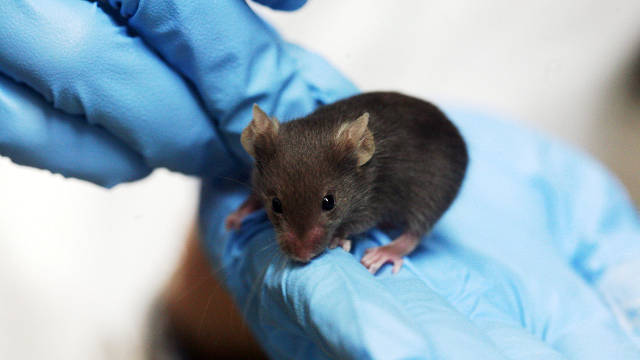
WIKIMEDIA, RAMAIn 2014, Richard Kramer from the University of California, Berkeley, and colleagues described a small molecule called DENAQ, which stimulated responses to light in the degenerated photoreceptors of blind mice. But the treatment required a high concentration of DENAQ, and the effects began to wane after only a couple of days, disappearing altogether after only a week or so. In response to these limitations, Kramer’s team developed BENAQ, “an improved photoswitch that is potent, long-lasting, and safe in large animal eyes,” the researchers reported today (April 13) in Scientific Reports.

In blind mice, BENAQ was 20-fold more potent than DENAQ, the researchers found, restoring the animals’ visual responses for nearly a month. Like DENAQ, the new compound selectively targeted blind retinas, leaving healthy retinas unaffected. Finally, the team demonstrated that BENAQ is nontoxic in mice and rabbits at concentrations ten-fold higher than needed to see the treatment’s effects. “Together, these properties make BENAQ potentially more suitable for future clinical use,” the authors wrote.

Interested in reading more?

Become a Member of

The Scientist Logo
Receive full access to more than 35 years of archives, as well as TS Digest, digital editions of The Scientist, feature stories, and much more!
Already a member? Login Here

Related Topics

Meet the Author

  • Jef (an unusual nickname for Jennifer) got her master’s degree from Indiana University in April 2009 studying the mating behavior of seahorses. After four years of diving off the Gulf Coast of Tampa and performing behavioral experiments at the Tennessee Aquarium in Chattanooga, she left research to pursue a career in science writing. As The Scientist's managing editor, Jef edited features and oversaw the production of the TS Digest and quarterly print magazine. In 2022, her feature on uterus transplantation earned first place in the trade category of the Awards for Excellence in Health Care Journalism. She is a member of the National Association of Science Writers.

    View Full Profile
Share
Illustration of a developing fetus surrounded by a clear fluid with a subtle yellow tinge, representing amniotic fluid.
January 2026, Issue 1

What Is the Amniotic Fluid Composed of?

The liquid world of fetal development provides a rich source of nutrition and protection tailored to meet the needs of the growing fetus.

View this Issue
Skip the Wait for Protein Stability Data with Aunty

Skip the Wait for Protein Stability Data with Aunty

Unchained Labs
Graphic of three DNA helices in various colors

An Automated DNA-to-Data Framework for Production-Scale Sequencing

illumina
Exploring Cellular Organization with Spatial Proteomics

Exploring Cellular Organization with Spatial Proteomics

Abstract illustration of spheres with multiple layers, representing endoderm, ectoderm, and mesoderm derived organoids

Organoid Origins and How to Grow Them

Thermo Fisher Logo

Products

Brandtech Logo

BRANDTECH Scientific Introduces the Transferpette® pro Micropipette: A New Twist on Comfort and Control

Biotium Logo

Biotium Launches GlycoLiner™ Cell Surface Glycoprotein Labeling Kits for Rapid and Selective Cell Surface Imaging

Colorful abstract spiral dot pattern on a black background

Thermo Scientific X and S Series General Purpose Centrifuges

Thermo Fisher Logo
Abstract background with red and blue laser lights

VANTAstar Flexible microplate reader with simplified workflows

BMG LABTECH










