What to Do About “Clare Francis”

Anonymous tipsters who allege scientific misconduct can make journal editors squeamish. But should a whistleblower's identity matter?

Written byKerry Grens
| 4 min read

Register for free to listen to this article
Listen with Speechify
0:00
4:00
Share

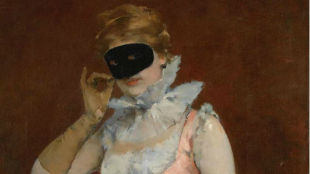
WIKIMEDIA, FRANCESCO MIRALLES GALUPIn July, Michael Sarr, an editor of the journal Surgery, received an e-mail from an unknown tipster named Clare Francis, alerting him that material from a 2004 paper published in his journal might have previously appeared in Oncogene. “If this was dual publication, we would retract our article and the author would be censored,” said Sarr, who is also a professor at the Mayo Clinic in Rochester, Minnesota. “You bet we looked into it.”

Sarr spoke with the paper’s authors and read both manuscripts carefully. He determined that the “titles looked similar, but they were totally different experiments.” The experience frustrated him. It took Sarr several hours to investigate the claim, and he felt that Francis had accused researchers of fraud without doing enough digging of her own. In an e-mail exchange with Francis, Sarr alleged that she had wasted his time. “Quite frankly, in the future, unless you wish to point out how these articles are exactly the same and unless you do your research, we (at Surgery) are going to ignore any further claims that you send us,” he wrote.

Francis—whose real identity, gender, and occupation remain secret—is notorious among journal editors as a relentless whistleblower. However, ...

Interested in reading more?

Become a Member of

The Scientist Logo
Receive full access to more than 35 years of archives, as well as TS Digest, digital editions of The Scientist, feature stories, and much more!
Already a member? Login Here

Related Topics

Meet the Author

  • kerry grens

    Kerry served as The Scientist’s news director until 2021. Before joining The Scientist in 2013, she was a stringer for Reuters Health, the senior health and science reporter at WHYY in Philadelphia, and the health and science reporter at New Hampshire Public Radio. Kerry got her start in journalism as a AAAS Mass Media fellow at KUNC in Colorado. She has a master’s in biological sciences from Stanford University and a biology degree from Loyola University Chicago.

    View Full Profile
Share
Illustration of a developing fetus surrounded by a clear fluid with a subtle yellow tinge, representing amniotic fluid.
January 2026, Issue 1

What Is the Amniotic Fluid Composed of?

The liquid world of fetal development provides a rich source of nutrition and protection tailored to meet the needs of the growing fetus.

View this Issue
Skip the Wait for Protein Stability Data with Aunty

Skip the Wait for Protein Stability Data with Aunty

Unchained Labs
Graphic of three DNA helices in various colors

An Automated DNA-to-Data Framework for Production-Scale Sequencing

illumina
Exploring Cellular Organization with Spatial Proteomics

Exploring Cellular Organization with Spatial Proteomics

Abstract illustration of spheres with multiple layers, representing endoderm, ectoderm, and mesoderm derived organoids

Organoid Origins and How to Grow Them

Thermo Fisher Logo

Products

nuclera logo

Nuclera eProtein Discovery System installed at leading Universities in Taiwan

Brandtech Logo

BRANDTECH Scientific Introduces the Transferpette® pro Micropipette: A New Twist on Comfort and Control

Biotium Logo

Biotium Launches GlycoLiner™ Cell Surface Glycoprotein Labeling Kits for Rapid and Selective Cell Surface Imaging

Colorful abstract spiral dot pattern on a black background

Thermo Scientific X and S Series General Purpose Centrifuges

Thermo Fisher Logo






