Microbiology

A yellow, hairy caterpillar is sitting on a green leaf off a thin plant stem.

Deciphering Plants’ Biochemical Messages

The figure shows two waves made of DNA double helixes representing gene expression changes in the malaria parasite and its human host. These changes reveal a synchronization between parasite and host.

Malaria Parasites Sync with Hosts’ Molecular Rhythms

landscape of frozen river

Worms Frozen for 46,000 Years are the Oldest Known Living Animals

Doctor in rubber gloves wiping injection site on arm of little girl before vaccination

Vaginal Delivery Promotes Early Childhood Vaccine Response

Image of coral reef

A Probiotic to Protect Caribbean Corals

<em >The Scientist</em>&rsquo;s Journal Club: Infectious Diseases

The Scientist’s Journal Club: Infectious Diseases

iStock

Fecal Microbiota Transplants: From Gut Infections to Psychiatric Disorders

Microscopic image of a torn piece of gray plastic on a white background.

Alpine and Arctic Microbes Break Down Plastics

Illustration of gut microbes

Microbial Menace in Cancer Patients

Infographic showing a new way to assess antibiotic effectiveness based on how much bacteria jiggle

Jiggling Bacteria Reveal Antibiotic Resistance

Cheese wheels with moldy rinds on a wooden plank

Deleting a Gene Quells a Pesky Cheese-Destroying Fungus

Epithelial cells and fungal spores are marked with fluorescent dyes. Cells have an irregular shape and are shown in green and blue colors. Spores are spherical in shape and are labeled green if they are surrounded by p11 protein. A protein in mature phagosomes is labeled violet.

Fungal Spores Hijack a Host Protein to Escape Death

Trending

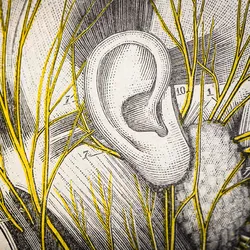
An old medical illustration features the ear in the center with nerves of the head shown in yellow.

The Ear as a Therapeutic Gateway to the Vagus Nerve

Photo of John Calhoun crouches within his rodent utopia-turned-dystopia

Universe 25 Experiment

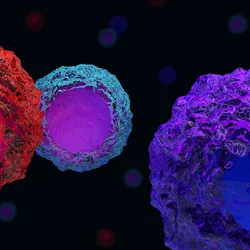
3D illustration showing three differently colored semi-translucent cells, representing different T cell subtypes, on a black background. A purple cell is in the front on the right, a red cell is on the left, and a blue cell sits behind the red one.

T Cell Nomenclature Gets an Update

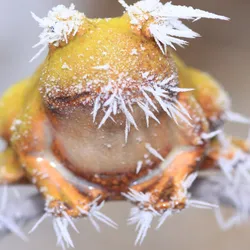
A yellow-colored frozen frog.

Freeze-Tolerant Frogs Power Organ Cryopreservation Strategies

Multimedia

Skip the Wait for Protein Stability Data with Aunty

Skip the Wait for Protein Stability Data with Aunty

Unchained Labs
Colorful abstract spiral dot pattern on a black background

Thermo Scientific X and S Series General Purpose Centrifuges

Thermo Fisher Logo
Illustration of a developing fetus surrounded by a clear fluid with a subtle yellow tinge, representing amniotic fluid.
January 2026, Issue 1

What Is the Amniotic Fluid Composed of?

The liquid world of fetal development provides a rich source of nutrition and protection tailored to meet the needs of the growing fetus.

View this Issue
Skip the Wait for Protein Stability Data with Aunty

Skip the Wait for Protein Stability Data with Aunty

Unchained Labs
Graphic of three DNA helices in various colors

An Automated DNA-to-Data Framework for Production-Scale Sequencing

illumina
Exploring Cellular Organization with Spatial Proteomics

Exploring Cellular Organization with Spatial Proteomics

Abstract illustration of spheres with multiple layers, representing endoderm, ectoderm, and mesoderm derived organoids

Organoid Origins and How to Grow Them

Thermo Fisher Logo

Products

nuclera logo

Nuclera eProtein Discovery System installed at leading Universities in Taiwan

Brandtech Logo

BRANDTECH Scientific Introduces the Transferpette® pro Micropipette: A New Twist on Comfort and Control

Biotium Logo

Biotium Launches GlycoLiner™ Cell Surface Glycoprotein Labeling Kits for Rapid and Selective Cell Surface Imaging

Colorful abstract spiral dot pattern on a black background

Thermo Scientific X and S Series General Purpose Centrifuges

Thermo Fisher Logo