Drug Stimulates Brown Fat

A small study finds that an approved medication increases metabolic rate and the activity of thermogenic brown fat in men.

Written byKerry Grens
| 1 min read

Register for free to listen to this article
Listen with Speechify
0:00
1:00
Share

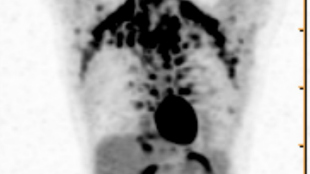
WIKIMEDIA, HELLERHOFFThe stimulation of so-called brown fat—the energy-burning kind—is thought to be a potential therapeutic target for obesity. In a study published in Cell Metabolism this month (January 6), researchers gave volunteers an already-approved drug, which, as it turned out, appeared to stimulate metabolism and the activity of brown fat.

The drug, mirabegron, acts as an agonist of β3-adrenergic receptors and is given to patients who experience overactive bladder. “Brown adipose tissue, or brown fat, produces β3-adrenergic receptor at levels higher than nearly every other organ in the body. We showed that a one-time dose of the drug mirabegron stimulates human brown adipose tissue so that it consumes glucose and burns calories,” study coauthor Aaron Cypess of the National Institute of Diabetes and Digestive and Kidney Diseases said in a statement.

The researchers estimated that at the 200 milligram dose used in the study, men taking mirabegron could lose around five kilograms (11 pounds) in the first year, and 10 kilograms (22 pounds) after three years of treatment. “Though promising, the actual amount of weight ...

Interested in reading more?

Become a Member of

The Scientist Logo
Receive full access to more than 35 years of archives, as well as TS Digest, digital editions of The Scientist, feature stories, and much more!
Already a member? Login Here

Related Topics

Meet the Author

  • kerry grens

    Kerry served as The Scientist’s news director until 2021. Before joining The Scientist in 2013, she was a stringer for Reuters Health, the senior health and science reporter at WHYY in Philadelphia, and the health and science reporter at New Hampshire Public Radio. Kerry got her start in journalism as a AAAS Mass Media fellow at KUNC in Colorado. She has a master’s in biological sciences from Stanford University and a biology degree from Loyola University Chicago.

    View Full Profile
Share
February 2026

A Stubborn Gene, a Failed Experiment, and a New Path

When experiments refuse to cooperate, you try again and again. For Rafael Najmanovich, the setbacks ultimately pushed him in a new direction.

View this Issue
Human-Relevant In Vitro Models Enable Predictive Drug Discovery

Advancing Drug Discovery with Complex Human In Vitro Models

Stemcell Technologies
Redefining Immunology Through Advanced Technologies

Redefining Immunology Through Advanced Technologies

Ensuring Regulatory Compliance in AAV Manufacturing with Analytical Ultracentrifugation

Ensuring Regulatory Compliance in AAV Manufacturing with Analytical Ultracentrifugation

Beckman Coulter Logo
Conceptual multicolored vector image of cancer research, depicting various biomedical approaches to cancer therapy

Maximizing Cancer Research Model Systems

bioxcell

Products

Sino Biological Logo

Sino Biological Pioneers Life Sciences Innovation with High-Quality Bioreagents on Inside Business Today with Bill and Guiliana Rancic

Sino Biological Logo

Sino Biological Expands Research Reagent Portfolio to Support Global Nipah Virus Vaccine and Diagnostic Development

Beckman Coulter

Beckman Coulter Life Sciences Partners with Automata to Accelerate AI-Ready Laboratory Automation

Refeyn logo

Refeyn named in the Sunday Times 100 Tech list of the UK’s fastest-growing technology companies










