




Illustration representing the finding of distinct gene associations and their risk in obesity from people of different ancestries. A global map is shown in blue with red and black human silhouettes arranged on the continents, representing people with and without gene mutations for obesity. A red and black loop of DNA is twisted around the world in a figure eight pattern.
| 2 min read
Including more diverse populations in genetic studies can improve the understanding of obesity and lead to the development of better treatments for more people.

obesity

A looping spiral of genomic code. Researchers used genomic analysis to determine a predictive obesity score.

Gene Score Predicts Obesity, Even in Young Children

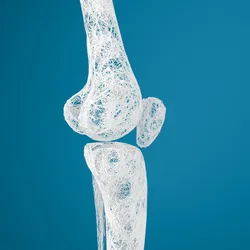
A digital drawing of human leg bones against a blue background.

Obesity Impairs Bone Health in Growing Children

A genetically obese lab mouse.

Targeting a Fat Cell Receptor to Drive Weight Loss

A photo of a female grizzly bear and her cubs.

Bear Necessities: Insights from Grizzly Bears

A hand holding multiple injection pens.

Scientists Who Pioneered GLP-1 Drugs Bag Breakthrough Prize

Flat and colorful vector illustration depicting pharmaceutical research concept.

Tapping Into the Full Therapeutic Potential of GLP-1

A chocolate Labrador Retriever puppy sits above a ceramic dog bowl. There is kibble scattered on the floor around the puppy.

Canine Cravings: Labradors and Humans Share Obesity Genes

Image of chicken, beef, fish, and eggs displayed on a cutting board against a grey background.

Metabolism on the Menu: A New Target for Body Weight Regulation

A microscopy image showing white rounded cells with pink borders.

A Protein That Converts Fat-Storing Cells into Calorie-Burning Cells 

Trending

Photo of John Calhoun crouches within his rodent utopia-turned-dystopia

Universe 25 Experiment

A close-up image of a fly landing on a dessert

What Happens When a Fly Lands on Your Food? 

Red and green small tomatoes. A new genetic engineering approach helped gene-edited plants grow faster.

Gene-Edited Crops Grow Faster with a Little Help from Bacteria

Image of an infant’s feet that are visible in a hospital incubator.

Record-Breaking DNA Sequencing Technology Could Transform Newborn Care

Multimedia

Golden geometric pattern on a blue background, symbolizing the precision, consistency, and technique essential to effective pipetting.

Best Practices for Precise Pipetting

Integra Logo
Various cell culture containers, including dishes and flasks, filled with media and stacked inside an incubator.

Optimizing Cell Culture Workflows

Eppendorf logo
Image of a woman with her hands across her stomach. She has a look of discomfort on her face. There is a blown up image of her stomach next to her and it has colorful butterflies and gut bacteria all swarming within the gut.
November 2025, Issue 1

Why Do We Feel Butterflies in the Stomach?

These fluttering sensations are the brain’s reaction to certain emotions, which can be amplified or soothed by the gut’s own “bugs".

View this Issue
Golden geometric pattern on a blue background, symbolizing the precision, consistency, and technique essential to effective pipetting.

Best Practices for Precise Pipetting

Integra Logo
Olga Anczukow and Ryan Englander discuss how transcriptome splicing affects immune system function in lung cancer.

Long-Read RNA Sequencing Reveals a Regulatory Role for Splicing in Immunotherapy Responses

Pacific Biosciences logo
Research Roundtable: The Evolving World of Spatial Biology

Research Roundtable: The Evolving World of Spatial Biology

Conceptual cartoon image of gene editing technology

Exploring the State of the Art in Gene Editing Techniques

Bio-Rad

Products

Labvantage Logo

LabVantage Solutions Awarded $22.3 Million U.S Customs and Border Protection Contract to Deliver Next-Generation Forensic LIMS

The Scientist Placeholder Image

Evosep Unveils Open Innovation Initiative to Expand Standardization in Proteomics

OGT logo

OGT expands MRD detection capabilities with new SureSeq Myeloid MRD Plus NGS Panel