


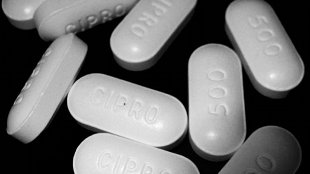
 WIKIMEDIA, SHORELANDERSeeking relief from their acute bronchitis and sore throat symptoms, many patients pay visits to their doctors, who often prescribe antibiotics. But not all patients experiencing symptoms of bronchitis and sore throat benefit from the drugs. And according to a study published this week (October 3) in JAMA Internal Medicine, physicians who prescribe antibiotics even when they might not help may be contributing to the growing problem of drug-resistance.
“We know that antibiotic prescribing, particularly to patients who are not likely to benefit from it, increases the prevalence of antibiotic-resistant bacteria, a growing concern both here in the United States and around the world,” study coauthor Jeffrey Linder, a physician-researcher at Brigham and Women’s Hospital in Boston, said in a statement. Analyzing records from primary-care and emergency-department visits, Linder and his colleague Michael Barnett found that the national prescribing rate for adults with sore throat held steady at around 60 percent from 1997 to 2010. But only around 10 percent of adults with sore throat are infected with group A Streptococcus—the only common cause of the symptom requiring antibiotics. Meanwhile, “for acute bronchitis, the right antibiotic prescribing rate should be near zero percent, and ...













