Genome Digest

What researchers are learning as they sequence, map, and decode species’ genomes

Written byTracy Vence
| 3 min read

Register for free to listen to this article
Listen with Speechify
0:00
3:00
Share

FLICKR, GENE TOBIA

Species: Orchid (Phalaenopsis equestris)
Genome size: 1.2 billion base pairs (estimated)

A team led by investigators at the Shenzhen Key Laboratory for Orchid Conservation and Utilization in China published a genome sequence last month (November 24) for the tropical epiphytic orchid Phalaenopsis equestris—a species commonly used for breeding—that contains 29,431 predicted protein-coding genes. The sequence provides “fundamental knowledge for further research in orchid biology,” the researchers wrote in their Nature Genetics paper.
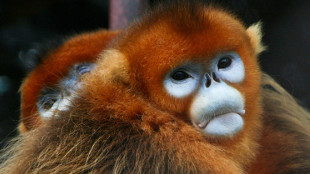
WIKIMEDIA, JACK HYNESSpecies: Golden snub-nosed monkey (Rhinopithecus roxellana)
Genome size: 3 billion base pairs (estimated)

Researchers from the Chinese Academy of Sciences in Beijing and their colleagues have sequenced and assembled the genome of a male golden snub-nosed monkey, which they compared with ...

Interested in reading more?

Become a Member of

The Scientist Logo
Receive full access to more than 35 years of archives, as well as TS Digest, digital editions of The Scientist, feature stories, and much more!
Already a member? Login Here

Related Topics

Meet the Author

Share
Illustration of a developing fetus surrounded by a clear fluid with a subtle yellow tinge, representing amniotic fluid.
January 2026, Issue 1

What Is the Amniotic Fluid Composed of?

The liquid world of fetal development provides a rich source of nutrition and protection tailored to meet the needs of the growing fetus.

View this Issue
Skip the Wait for Protein Stability Data with Aunty

Skip the Wait for Protein Stability Data with Aunty

Unchained Labs
Graphic of three DNA helices in various colors

An Automated DNA-to-Data Framework for Production-Scale Sequencing

illumina
Exploring Cellular Organization with Spatial Proteomics

Exploring Cellular Organization with Spatial Proteomics

Abstract illustration of spheres with multiple layers, representing endoderm, ectoderm, and mesoderm derived organoids

Organoid Origins and How to Grow Them

Thermo Fisher Logo

Products

nuclera logo

Nuclera eProtein Discovery System installed at leading Universities in Taiwan

Brandtech Logo

BRANDTECH Scientific Introduces the Transferpette® pro Micropipette: A New Twist on Comfort and Control

Biotium Logo

Biotium Launches GlycoLiner™ Cell Surface Glycoprotein Labeling Kits for Rapid and Selective Cell Surface Imaging

Colorful abstract spiral dot pattern on a black background

Thermo Scientific X and S Series General Purpose Centrifuges

Thermo Fisher Logo






