Genome Digest

What researchers are learning as they sequence, map, and decode species’ genomes

Written byTracy Vence
| 4 min read

Register for free to listen to this article
Listen with Speechify
0:00
4:00

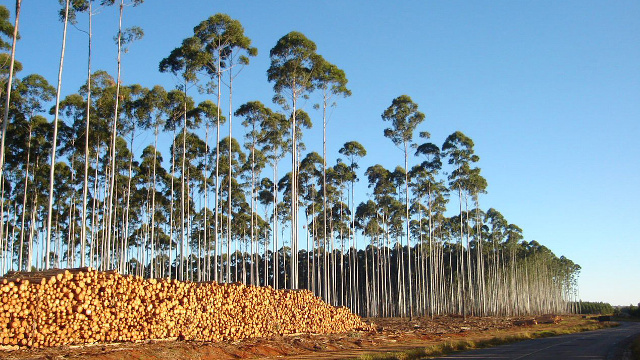
Six-year old trees (Eucalyptus benthamii) harvested for power generationH.D. SILVA, EMBRAPA FORESTRY

Species: Flooded gum tree (Eucalyptus grandis)
Genome size: 640 million base pairs

A team led by investigators at South Africa’s University of Pretoria today (June 11) published in Nature the first reference genome for the eudicot order Myrtales, that of Eucalyptus grandis. Within the 640-megabase genome, the researchers predicted 36,376 protein-coding genes, a third of which exist within tandem duplications, “the largest proportion thus far in plant genomes,” they wrote in their paper. The researchers also identified genes behind specialized metabolites that play roles in the plant’s defense and contribute to the production of essential oils used across a variety of industries.

“Future studies of variation in functional genes will provide insights into the relative influences of drift and selection on Eucalyptus evolution and identify ...

Interested in reading more?

Become a Member of

The Scientist Logo
Receive full access to more than 35 years of archives, as well as TS Digest, digital editions of The Scientist, feature stories, and much more!
Already a member?
Add The Scientist as a preferred source on Google

Add The Scientist as a preferred Google source to see more of our trusted coverage.

Meet the Author

Related Topics

Related articles background image
The Scientist Digest cover September 2026
September 2026

Multiplex Microscopy Becomes Easier with Encoded Antibodies

A new system that enables researchers to uniquely tag monoclonal antibodies for use in microscopy could help simplify complex imaging studies.

View this Issue
Essential Genes Are Dominantly Activated by Single Transcription Factors

Essential Genes Are Dominantly Activated by Single Transcription Factors

EpiCypher Logo
Rethinking ALS Biomarkers: From Discovery to Clinical Impact

Rethinking ALS Biomarkers: From Discovery to Clinical Impact

Alamar Biosciences logo
Engineering CAR-Neutrophils In Vivo to Target Glioblastoma

Engineering CAR-Neutrophils In Vivo to Target Glioblastoma

Miltenyi
Best Practices for qPCR Assay Design and Optimization

Best Practices for qPCR Assay Design and Optimization

Bio-Rad

Products

Closeup image of a multi channel pipette dispensing pink liquid into a 96-well plate.

The ASSIST PLUS pipetting robot for affordable workflow automation

Integra Logo
Single cells in suspension

Rapidly isolate primary cells and make uniform single-cell suspensions with Corning® Cell Strainers

Corning logo
Abstract image representing cell membranes linked together.

CellBrite® Steady Membrane Stain: Cell surface staining built for real-time imaging

Biotium
sino biological logo

Monod Bio Licenses AI-designed Protein Technologies to SignalChem Biotech for Custom Discovery Assays