Kelp Pathogen Has Spread Across the Southern Ocean

Scientists suspect the gall-forming protist Maullinia hitches a ride on kelp rafts to reach new host populations at far-flung sites.

Written byChris Baraniuk
| 3 min read
kelp maullinia pathogen parasite marine biology

Register for free to listen to this article
Listen with Speechify
0:00
3:00
Share

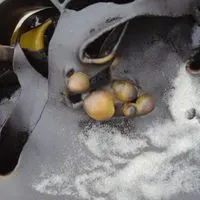
ABOVE: Diseased-looking kelp potentially infected with Maullinia
DAVE CRAW

Across the Southern Hemisphere, patches of seaweed are getting sick. Scientists have found strange yellow growths called galls on kelp in Latin America, southern Africa, and Australasia. The disease is caused by a pathogenic protist that has somehow travelled thousands of miles to infect its hosts.

The parasite in question is called Maullinia, and only a handful of studies have investigated it to date. Little is known about exactly how widespread it is or how much it may harm kelp but scientists recently found it in yet another location: New Zealand. Previous studies had detected Maullinia in Chile, South Africa’s Marion Island, and Australia. Marine biologists lack a full understanding of how kelp is affected by the infections, but some say it’s nevertheless a cause for concern.

It was while she was working at Australian National University in 2017 that marine biologist ...
Interested in reading more?

Become a Member of

The Scientist Logo
Receive full access to more than 35 years of archives, as well as TS Digest, digital editions of The Scientist, feature stories, and much more!
Already a member? Login Here

Related Topics

Meet the Author

  • chris baraniuk

    Chris Baraniuk is a freelance science journalist based in Northern Ireland who contributes to The Scientist. He has covered biological and medical science for a range of publications, including the BBC, the BMJ, and Mosaic. He also writes about nature, climate change, and technology. His background in the humanities has long proved invaluable in his quest to bring science stories to people from all walks of life.

    View Full Profile
Share
Illustration of a developing fetus surrounded by a clear fluid with a subtle yellow tinge, representing amniotic fluid.
January 2026

What Is the Amniotic Fluid Composed of?

The liquid world of fetal development provides a rich source of nutrition and protection tailored to meet the needs of the growing fetus.

View this Issue
Redefining Immunology Through Advanced Technologies

Redefining Immunology Through Advanced Technologies

Ensuring Regulatory Compliance in AAV Manufacturing with Analytical Ultracentrifugation

Ensuring Regulatory Compliance in AAV Manufacturing with Analytical Ultracentrifugation

Beckman Coulter Logo
Skip the Wait for Protein Stability Data with Aunty

Skip the Wait for Protein Stability Data with Aunty

Unchained Labs
Graphic of three DNA helices in various colors

An Automated DNA-to-Data Framework for Production-Scale Sequencing

illumina

Products

nuclera logo

Nuclera eProtein Discovery System installed at leading Universities in Taiwan

Brandtech Logo

BRANDTECH Scientific Introduces the Transferpette® pro Micropipette: A New Twist on Comfort and Control

Biotium Logo

Biotium Launches GlycoLiner™ Cell Surface Glycoprotein Labeling Kits for Rapid and Selective Cell Surface Imaging

Colorful abstract spiral dot pattern on a black background

Thermo Scientific X and S Series General Purpose Centrifuges

Thermo Fisher Logo







