More Questionable Stem-Cell Science

Disgraced stem-cell researcher Hisashi Moriguchi has published three new papers in BMJ Case Reports, including a rehashing of a retracted 2012 paper.

Written byChris Palmer
| 2 min read

Register for free to listen to this article
Listen with Speechify
0:00
2:00
Share

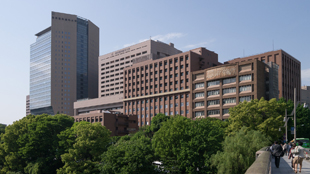
Tokyo Medical and Dental UniversityWikimedia Commons, Rs1421Hisashi Moriguchi is at it again. The researcher, who last year confessed to falsifying stem-cell findings in a number of published papers, has published three new studies over the past 2 months in the peer-reviewed medical journal BMJ Case Reports, Nature reported last week.

In October 2012, a Nature investigation brought to light the fraudulent nature of Moriguchi’s work, including descriptions of six heart disease patients who had experienced significant therapeutic improvement after receiving injections of cardiac muscle cells derived from induced pluripotent stem cells (iPSCs) in their hearts. Moriguchi subsequently admitted that his claims were false, leading to his dismissal from the University of Tokyo and the retraction of several papers.

Now, Moriguchi, who has a degree in nursing and a master’s in health promotion, but no formal training in molecular biology, has three new papers out in BMJ Case Reports. One paper, published online in April, describes a procedure for supercooling oocytes to preserve eggs from the ovaries of cancer patients for future in vitro fertilization procedures. ...

Interested in reading more?

Become a Member of

The Scientist Logo
Receive full access to more than 35 years of archives, as well as TS Digest, digital editions of The Scientist, feature stories, and much more!
Already a member? Login Here
Image of a woman with her hands across her stomach. She has a look of discomfort on her face. There is a blown up image of her stomach next to her and it has colorful butterflies and gut bacteria all swarming within the gut.
November 2025, Issue 1

Why Do We Feel Butterflies in the Stomach?

These fluttering sensations are the brain’s reaction to certain emotions, which can be amplified or soothed by the gut’s own “bugs".

View this Issue
Olga Anczukow and Ryan Englander discuss how transcriptome splicing affects immune system function in lung cancer.

Long-Read RNA Sequencing Reveals a Regulatory Role for Splicing in Immunotherapy Responses

Pacific Biosciences logo
Research Roundtable: The Evolving World of Spatial Biology

Research Roundtable: The Evolving World of Spatial Biology

Conceptual cartoon image of gene editing technology

Exploring the State of the Art in Gene Editing Techniques

Bio-Rad
Conceptual image of a doctor holding a brain puzzle, representing Alzheimer's disease diagnosis.

Simplifying Early Alzheimer’s Disease Diagnosis with Blood Testing

fujirebio logo

Products

Eppendorf Logo

Research on rewiring neural circuit in fruit flies wins 2025 Eppendorf & Science Prize

Evident Logo

EVIDENT's New FLUOVIEW FV5000 Redefines the Boundaries of Confocal and Multiphoton Imaging

Evident Logo

EVIDENT Launches Sixth Annual Image of the Year Contest

10x Genomics Logo

10x Genomics Launches the Next Generation of Chromium Flex to Empower Scientists to Massively Scale Single Cell Research