Reproducibility Initiative Shrinks

Budget issues are limiting the number of studies the Reproducibility Project: Cancer Biology will try to re-do.

Written byKerry Grens
| 1 min read

Register for free to listen to this article
Listen with Speechify
0:00
1:00
Share

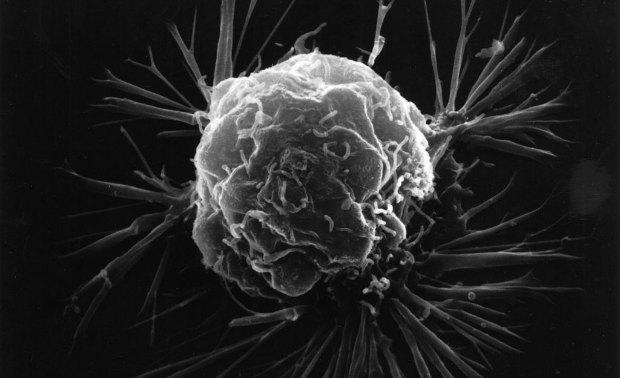
WIKIMEDIA, NATIONAL CANCER INSTITUTEThe Reproducibility Project: Cancer Biology originally intended to replicate 50 high-impact cancer papers in an effort to get some sense of how often scientific results are repeatable. But as Nature News reported yesterday (December 2), that number is scaling back to 37.

According to the news report, the project had estimated each study would cost $25,000 to $35,000, but as things got moving the costs became closer to $40,000 per replicated study.

“I don’t think that was truly appreciated at the beginning of the project,” Tim Errington, a project manager at the Center for Open Science, which is coleading the project, told Nature News. “The best thing for us to do is move forward with what we have.”

The 13 culled papers hadn’t made much progress so far and included animal experiments, which can be expensive.

Some expressed disappointment at the reduction. “Bad news, was looking forward to this,” @PubPeer tweeted. Others have criticized the reproducibility initiative for being marked with “a naiveté that by simply embracing ...

Interested in reading more?

Become a Member of

The Scientist Logo
Receive full access to more than 35 years of archives, as well as TS Digest, digital editions of The Scientist, feature stories, and much more!
Already a member? Login Here

Related Topics

Meet the Author

  • kerry grens

    Kerry served as The Scientist’s news director until 2021. Before joining The Scientist in 2013, she was a stringer for Reuters Health, the senior health and science reporter at WHYY in Philadelphia, and the health and science reporter at New Hampshire Public Radio. Kerry got her start in journalism as a AAAS Mass Media fellow at KUNC in Colorado. She has a master’s in biological sciences from Stanford University and a biology degree from Loyola University Chicago.

    View Full Profile
Share
Illustration of a developing fetus surrounded by a clear fluid with a subtle yellow tinge, representing amniotic fluid.
January 2026, Issue 1

What Is the Amniotic Fluid Composed of?

The liquid world of fetal development provides a rich source of nutrition and protection tailored to meet the needs of the growing fetus.

View this Issue
Skip the Wait for Protein Stability Data with Aunty

Skip the Wait for Protein Stability Data with Aunty

Unchained Labs
Graphic of three DNA helices in various colors

An Automated DNA-to-Data Framework for Production-Scale Sequencing

illumina
Exploring Cellular Organization with Spatial Proteomics

Exploring Cellular Organization with Spatial Proteomics

Abstract illustration of spheres with multiple layers, representing endoderm, ectoderm, and mesoderm derived organoids

Organoid Origins and How to Grow Them

Thermo Fisher Logo

Products

Brandtech Logo

BRANDTECH Scientific Introduces the Transferpette® pro Micropipette: A New Twist on Comfort and Control

Biotium Logo

Biotium Launches GlycoLiner™ Cell Surface Glycoprotein Labeling Kits for Rapid and Selective Cell Surface Imaging

Colorful abstract spiral dot pattern on a black background

Thermo Scientific X and S Series General Purpose Centrifuges

Thermo Fisher Logo
Abstract background with red and blue laser lights

VANTAstar Flexible microplate reader with simplified workflows

BMG LABTECH