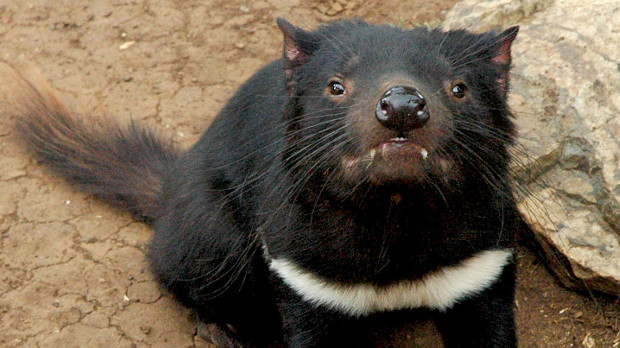
 Tasmanian devilWIKICOMMONS, KERESHDevil facial tumor disease (DFTD) in Tasmanian devils (Sarcophilus harrisii) was first found in 1996. Ten years later, it was confirmed as a transmissible cancer. The disease spreads from animal to animal via living cancer cells, causing tumors on the side of the faces or inside the mouths of the carnivorous marsupials. Now, researchers have found a second such tumor, one that is genetically and histologically distinct from DFTD in five animals. The analysis of this new transmissible tumor, called DFT2, appeared this week (December 28) in PNAS.
DFTD, which researchers are now calling DFT1, was first noticed by a wildlife photographer and traced by researchers to a female animal. Biting spreads the tumors, which arose from mutated neural support cells called Schwann cells. The tumors metastasize readily to the lymph nodes, lungs, and kidneys in the animals. Transmissible cancers are very rare, although not all are fatal. So far, such tumors have been found in only three species—dogs, Tasmanian devils, and soft-shell clams.
“The devils and their tumors have been closely monitored since discovery of DFT1 and DFT2 was detected as a result of this close monitoring,” study coauthor Ruth Pye of the University of Tasmania’s Menzies Institute for Medical Research wrote in an email to The Scientist.
“One transmissible cancer is ...