


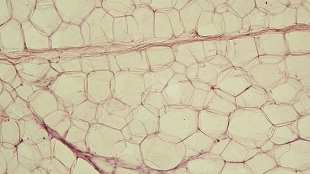
 WIKIMEDIA, REYTANBrown fat cells convert chemical energy into heat in response to cool temperatures—a form of thermogenesis that is induced indirectly via the sensory nervous system and a well-known signaling pathway. But certain white and beige fat cells can sense temperature directly to activate the suite of genes involved in heat generation, according to a study published today (July 1) in the Proceedings of the National Academy of Sciences.
“It’s a really interesting paper because it convincingly shows that there is a cell-autonomous mechanism for the induction of thermogenesis in fat cells that is not dependent on the sympathetic nervous system,” said Sven Enerbäck of the University of Gothenburg in Sweden, who was not involved in the study. “To my knowledge this is the first time anyone has reported that.”
“What this is means is that fat cells have a completely unstudied signaling system that ends up in activation of thermogenesis,” added Bruce Spiegelman, a cell biologist at Harvard Medical School and the Dana-Farber Cancer Institute in Boston, Massachusetts, who led the study. “This is mostly basic science, but from a biomedical perspective it will be interesting to find out what this unknown pathway ...













