The Scientist - Home

A pill is shown on a blue technical background. One half of the pill has a DNA helix on it, and the other half has a depiction of a computer chip, representing the role of artificial intelligence in drug development.
| 3 min read
2026 will be the year that artificial intelligence accelerates multiple aspects of the drug discovery and development pipeline, industry leaders predict.

Latest

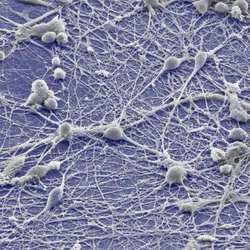
Microscope image of human induced pluripotent stem cell-derived neurons on graphene.

Light-Stimulated Graphene Activates and Matures Neurons

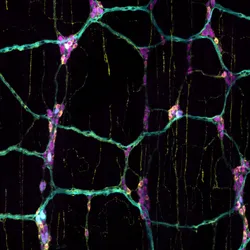
A digitally stitched image of nutrient-sensing neurons (cyan) in the mouse gut, highlighting a subset of inhibitory nerve cells (yellow).

How Does the Gut Sense Different Nutrients?

A doctor examines tonsils of a smiling little girl sitting in a woman’s lap.

Tonsil Organoids Serve Human Immunology in a Lab Dish

Mosaic-like black-and-white image of a person falling asleep, indicating excessive daytime sleepiness (EDS). The person is leaning on one side with a cheek propped on their hand.

Extra Tired During the Day? Certain Fats May Help

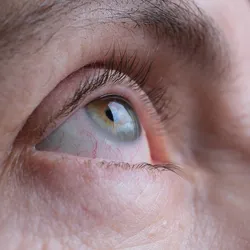
Photograph of an up-close shot of a person’s face to focus on their eye, which is looking upward.

Electric Bursts Reshape the Cornea to Improve Eyesight Without LASIK

A lab containing NMR instruments.

How a Small Lab Took on One of the World’s Rarest Diseases

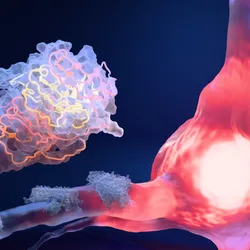
3D illustration of a neuron with the cell body highlighted in pink to represent damage from an amyloid β plaque on its axons to the left. An enlarged plaque bundle is shown in the top left corner of the image, with the fibrils highlighted in pink and yellow.

Amyloid Beta Impairs Microglia Function in Alzheimer’s Disease

A closeup picture of an angry woman, with steam blowing out of her ears. She wears a yellow top and growls at the camera.

Why Do We Get Hangry?

A child with short hair, wearing a grey textured sweater, blue jeans, and white shoes, sits facing the corner of a room. He buries his face in his hands.

PTSD Leaves Gene Expression “Scars” on Brain Cells

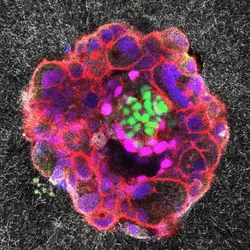
Microscopy image of a multicolored (green, magenta, blue, and green) spherical human embryo implanted on the synthetic matrix (the grainy grey-black background).

Scientists Watched Human Embryos Implant for the First Time

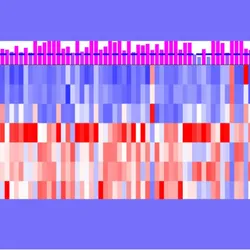
Image of expression patterns of predicted target de novo genes. These are depicted as bars of varying shades from white, red, and blue.

How Are De Novo Genes Regulated?

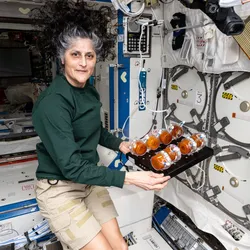
Astronaut Suni Williams displays production packs containing genetically engineered yeast and edible media for incubation to activate yeast growth.

Designer Microbes Aid Space Exploration Efforts

February 2026

A Stubborn Gene, a Failed Experiment, and a New Path

When experiments refuse to cooperate, you try again and again. For Rafael Najmanovich, the setbacks ultimately pushed him in a new direction.

View this Issue

Human-Relevant In Vitro Models Enable Predictive Drug Discovery

Advancing Drug Discovery with Complex Human In Vitro Models

Stemcell Technologies
Redefining Immunology Through Advanced Technologies

Redefining Immunology Through Advanced Technologies

Ensuring Regulatory Compliance in AAV Manufacturing with Analytical Ultracentrifugation

Ensuring Regulatory Compliance in AAV Manufacturing with Analytical Ultracentrifugation

Beckman Coulter Logo
Conceptual multicolored vector image of cancer research, depicting various biomedical approaches to cancer therapy

Maximizing Cancer Research Model Systems

bioxcell

Products

Sino Biological Logo

Sino Biological Pioneers Life Sciences Innovation with High-Quality Bioreagents on Inside Business Today with Bill and Guiliana Rancic

Sino Biological Logo

Sino Biological Expands Research Reagent Portfolio to Support Global Nipah Virus Vaccine and Diagnostic Development

Beckman Coulter

Beckman Coulter Life Sciences Partners with Automata to Accelerate AI-Ready Laboratory Automation

Refeyn logo

Refeyn named in the Sunday Times 100 Tech list of the UK’s fastest-growing technology companies