Anthrax Vax Test OK for Kids

A presidential bioethics commission lays out the framework for testing the anthrax vaccine in children.

Written byJef Akst
| 2 min read

Register for free to listen to this article
Listen with Speechify
0:00
2:00
Share

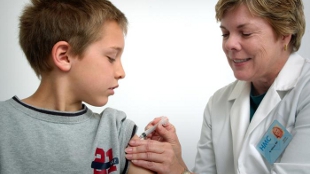
CDC, JUDY SCHMIDTIf the risks are low, researchers could be permitted to study the anthrax vaccine in children, according to a 146-page report released today (March 19) by the Presidential Commission for the Study of Bioethical Issues. The commission was tasked with investigating the issue in the fall of 2011 after the National Biodefense Science Board (NBSB) recommended trial of the anthrax vaccine in children.

“This was one of the most difficult ethical reviews that any bioethics commission has ever conducted,” the commission's chair, Amy Gutmann, president of the University of Pennsylvania, told ScienceInsider. On one hand, understanding appropriate usage and dosage of such a vaccine in children is critical for an effective response in the face of a bioterrorist threat. On the other hand, the study would likely expose children to certain risks and may offer no benefit to trial participants.

In weighing these considerations, the commission emphasized that the risks, such as soreness around an injection site, should be “minimal.” Such risks could be demonstrated in a study of young adults, such as those in the US military who have already received the vaccine—made from an inactivated protein ...

Interested in reading more?

Become a Member of

The Scientist Logo
Receive full access to more than 35 years of archives, as well as TS Digest, digital editions of The Scientist, feature stories, and much more!
Already a member? Login Here

Related Topics

Meet the Author

  • Jef (an unusual nickname for Jennifer) got her master’s degree from Indiana University in April 2009 studying the mating behavior of seahorses. After four years of diving off the Gulf Coast of Tampa and performing behavioral experiments at the Tennessee Aquarium in Chattanooga, she left research to pursue a career in science writing. As The Scientist's managing editor, Jef edited features and oversaw the production of the TS Digest and quarterly print magazine. In 2022, her feature on uterus transplantation earned first place in the trade category of the Awards for Excellence in Health Care Journalism. She is a member of the National Association of Science Writers.

    View Full Profile
Share
Image of a woman with her hands across her stomach. She has a look of discomfort on her face. There is a blown up image of her stomach next to her and it has colorful butterflies and gut bacteria all swarming within the gut.
November 2025, Issue 1

Why Do We Feel Butterflies in the Stomach?

These fluttering sensations are the brain’s reaction to certain emotions, which can be amplified or soothed by the gut’s own “bugs".

View this Issue
Olga Anczukow and Ryan Englander discuss how transcriptome splicing affects immune system function in lung cancer.

Long-Read RNA Sequencing Reveals a Regulatory Role for Splicing in Immunotherapy Responses

Pacific Biosciences logo
Research Roundtable: The Evolving World of Spatial Biology

Research Roundtable: The Evolving World of Spatial Biology

Conceptual cartoon image of gene editing technology

Exploring the State of the Art in Gene Editing Techniques

Bio-Rad
Conceptual image of a doctor holding a brain puzzle, representing Alzheimer's disease diagnosis.

Simplifying Early Alzheimer’s Disease Diagnosis with Blood Testing

fujirebio logo

Products

Eppendorf Logo

Research on rewiring neural circuit in fruit flies wins 2025 Eppendorf & Science Prize

Evident Logo

EVIDENT's New FLUOVIEW FV5000 Redefines the Boundaries of Confocal and Multiphoton Imaging

Evident Logo

EVIDENT Launches Sixth Annual Image of the Year Contest

10x Genomics Logo

10x Genomics Launches the Next Generation of Chromium Flex to Empower Scientists to Massively Scale Single Cell Research










