Biohacker Aaron Traywick Found Dead in DC Float Spa

The CEO of a biomedical startup had made headlines this year when he injected himself with an untested herpes vaccine in front of an audience.

Written byAshley Yeager
| 2 min read

Register for free to listen to this article
Listen with Speechify
0:00
2:00
Share

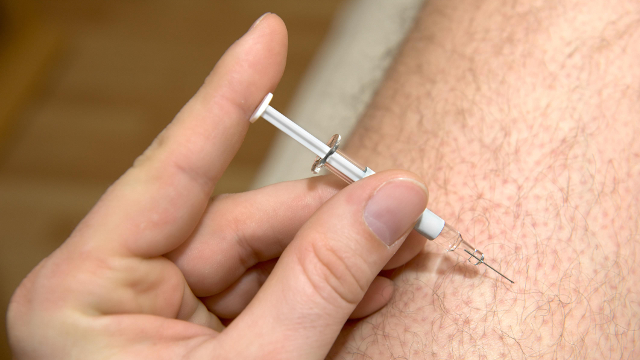
ISTOCK, CRUPHOTOBiohacker Aaron Traywick, who sparked controversy in February when he injected himself with an untested herpes vaccine, died on Sunday (April 29). He was 28.

The Metropolitan Police Department of the District of Columbia confirmed in an email to LiveScience that Traywick was found dead in a spa room in DC. In a statement sent to Gizmodo reporter Kristen Brown and posted on her Twitter feed, the police department says Traywick’s body has been taken to the Office of the Chief Medical Examiner for an autopsy, but no evidence exists right now to suggest a relationship between his death and the vaccine he injected into himself in February.

Traywick was CEO of Ascendance, a biotech startup aiming to develop gene therapy treatments and immunizations for HIV and herpes. It is also working on a gene therapy for “human augmentation designed to preserve bone mineral density and maximize muscle mass and ...

Interested in reading more?

Become a Member of

The Scientist Logo
Receive full access to more than 35 years of archives, as well as TS Digest, digital editions of The Scientist, feature stories, and much more!
Already a member? Login Here

Related Topics

Meet the Author

  • Ashley started at The Scientist in 2018. Before joining the staff, she worked as a freelance editor and writer, a writer at the Simons Foundation, and a web producer at Science News, among other positions. She holds a bachelor’s degree in journalism from the University of Tennessee, Knoxville, and a master’s degree in science writing from MIT. Ashley edits the Scientist to Watch and Profile sections of the magazine and writes news, features, and other stories for both online and print.

    View Full Profile
Share
Image of a woman with her hands across her stomach. She has a look of discomfort on her face. There is a blown up image of her stomach next to her and it has colorful butterflies and gut bacteria all swarming within the gut.
November 2025, Issue 1

Why Do We Feel Butterflies in the Stomach?

These fluttering sensations are the brain’s reaction to certain emotions, which can be amplified or soothed by the gut’s own “bugs".

View this Issue
Olga Anczukow and Ryan Englander discuss how transcriptome splicing affects immune system function in lung cancer.

Long-Read RNA Sequencing Reveals a Regulatory Role for Splicing in Immunotherapy Responses

Pacific Biosciences logo
Research Roundtable: The Evolving World of Spatial Biology

Research Roundtable: The Evolving World of Spatial Biology

Conceptual cartoon image of gene editing technology

Exploring the State of the Art in Gene Editing Techniques

Bio-Rad
Conceptual image of a doctor holding a brain puzzle, representing Alzheimer's disease diagnosis.

Simplifying Early Alzheimer’s Disease Diagnosis with Blood Testing

fujirebio logo

Products

Eppendorf Logo

Research on rewiring neural circuit in fruit flies wins 2025 Eppendorf & Science Prize

Evident Logo

EVIDENT's New FLUOVIEW FV5000 Redefines the Boundaries of Confocal and Multiphoton Imaging

Evident Logo

EVIDENT Launches Sixth Annual Image of the Year Contest

10x Genomics Logo

10x Genomics Launches the Next Generation of Chromium Flex to Empower Scientists to Massively Scale Single Cell Research










