Soil Bacteria Live on Wine Grapes

The earthiness of Merlot may have to do with grapevine-dwelling microbiota.

Written byKerry Grens
| 1 min read

Register for free to listen to this article
Listen with Speechify
0:00
1:00
Share

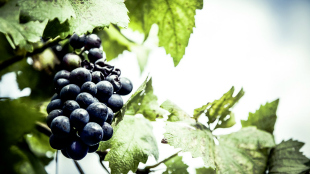
PIXABAY, MARKUSSPISKEThe fruits, flowers, and leaves on Merlot grapevines harbor bacterial taxa present in the surrounding soil, according to a study published this week (March 24) in mBio. Researchers suspect bacterial communities specific to a vine’s location may affect the flavor of wine made from those grapes.

“Where you grow that particular grapevine is the most important characteristic shaping which bacteria will colonize the plant,” study coauthor Jack Gilbert, a microbial ecologist at Argonne National Laboratory, said in a press release.

The idea of “terroir”—that the land shapes a wine’s qualities—is an old one, but Gilbert said that the microbiome is not usually included as one of the influencing factors. “From the wine industry’s perspective, terroir comes from the plant’s physiology, the chemical nature of the grapes, and the yeast that do the fermenting work,” he said. “We don’t have evidence that bacteria are specifically contributing to terroir, but our next step is to figure out how those bacteria are affecting the chemistry of the plant.”

Hat tip: Science News

Interested in reading more?

Become a Member of

The Scientist Logo
Receive full access to more than 35 years of archives, as well as TS Digest, digital editions of The Scientist, feature stories, and much more!
Already a member? Login Here

Related Topics

Meet the Author

  • kerry grens

    Kerry served as The Scientist’s news director until 2021. Before joining The Scientist in 2013, she was a stringer for Reuters Health, the senior health and science reporter at WHYY in Philadelphia, and the health and science reporter at New Hampshire Public Radio. Kerry got her start in journalism as a AAAS Mass Media fellow at KUNC in Colorado. She has a master’s in biological sciences from Stanford University and a biology degree from Loyola University Chicago.

    View Full Profile
Share
Image of a woman with her hands across her stomach. She has a look of discomfort on her face. There is a blown up image of her stomach next to her and it has colorful butterflies and gut bacteria all swarming within the gut.
November 2025, Issue 1

Why Do We Feel Butterflies in the Stomach?

These fluttering sensations are the brain’s reaction to certain emotions, which can be amplified or soothed by the gut’s own “bugs".

View this Issue
Olga Anczukow and Ryan Englander discuss how transcriptome splicing affects immune system function in lung cancer.

Long-Read RNA Sequencing Reveals a Regulatory Role for Splicing in Immunotherapy Responses

Pacific Biosciences logo
Research Roundtable: The Evolving World of Spatial Biology

Research Roundtable: The Evolving World of Spatial Biology

Conceptual cartoon image of gene editing technology

Exploring the State of the Art in Gene Editing Techniques

Bio-Rad
Conceptual image of a doctor holding a brain puzzle, representing Alzheimer's disease diagnosis.

Simplifying Early Alzheimer’s Disease Diagnosis with Blood Testing

fujirebio logo

Products

Labvantage Logo

LabVantage Solutions Awarded $22.3 Million U.S Customs and Border Protection Contract to Deliver Next-Generation Forensic LIMS

The Scientist Placeholder Image

Evosep Unveils Open Innovation Initiative to Expand Standardization in Proteomics

OGT logo

OGT expands MRD detection capabilities with new SureSeq Myeloid MRD Plus NGS Panel










