The New Species of 2017

A sampling of some of the fascinating critters identified by scientists this year

Written byJef Akst
| 5 min read

Register for free to listen to this article
Listen with Speechify
0:00
5:00
Share

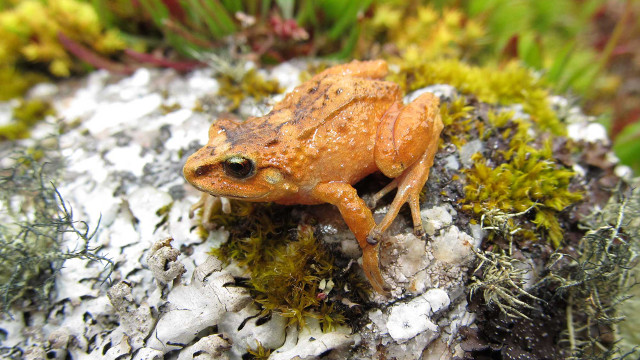
Hill dweller rubber frog (Pristimantis bounides)RUDOLF VON MAY

In February, researchers used physical and genetic analyses to document two new toad species in the Sumatra highlands. The two species make up an entirely new genus, dubbed Sigalegalephrynus, or puppet toads, for their resemblance to the wooden figures used in local native ceremonies. It is only the second time that a new toad genus has been discovered in Asia since the 1800s, according to a press release.

“With more thorough exploration like ours, Indonesia will probably rank as the most biodiverse country in the world in terms of herpetofauna,” coauthor Utpal Smart, who published the results in Herpetologica, says in the release.

Seven new species discovered from the Western GhatsSD BIJUThat same month, scientists from India discovered seven new frog species in the night frog genus Nyctibatrachus. Four of the new species are among the smallest in the world, measuring just 12 to 15 mm. Publishing in PeerJ, the researchers noted that the tiny frogs are surprisingly common. “[T]hey have probably been overlooked because of their extremely small size, secretive habitats and insect-like calls,” Sonali Garg, a PhD student at the University of Delhi at the time the work was carried out, says in a press release.

Interested in reading more?

Become a Member of

The Scientist Logo
Receive full access to more than 35 years of archives, as well as TS Digest, digital editions of The Scientist, feature stories, and much more!
Already a member? Login Here

Related Topics

Meet the Author

  • Jef (an unusual nickname for Jennifer) got her master’s degree from Indiana University in April 2009 studying the mating behavior of seahorses. After four years of diving off the Gulf Coast of Tampa and performing behavioral experiments at the Tennessee Aquarium in Chattanooga, she left research to pursue a career in science writing. As The Scientist's managing editor, Jef edited features and oversaw the production of the TS Digest and quarterly print magazine. In 2022, her feature on uterus transplantation earned first place in the trade category of the Awards for Excellence in Health Care Journalism. She is a member of the National Association of Science Writers.

    View Full Profile
Share
Image of a woman with her hands across her stomach. She has a look of discomfort on her face. There is a blown up image of her stomach next to her and it has colorful butterflies and gut bacteria all swarming within the gut.
November 2025, Issue 1

Why Do We Feel Butterflies in the Stomach?

These fluttering sensations are the brain’s reaction to certain emotions, which can be amplified or soothed by the gut’s own “bugs".

View this Issue
An image of a DNA sequencing spectrum with a radial blur filter applied.

A Comprehensive Guide to Next-Generation Sequencing

Integra Logo
Golden geometric pattern on a blue background, symbolizing the precision, consistency, and technique essential to effective pipetting.

Best Practices for Precise Pipetting

Integra Logo
Olga Anczukow and Ryan Englander discuss how transcriptome splicing affects immune system function in lung cancer.

Long-Read RNA Sequencing Reveals a Regulatory Role for Splicing in Immunotherapy Responses

Pacific Biosciences logo
Research Roundtable: The Evolving World of Spatial Biology

Research Roundtable: The Evolving World of Spatial Biology

Products

Labvantage Logo

LabVantage Solutions Awarded $22.3 Million U.S Customs and Border Protection Contract to Deliver Next-Generation Forensic LIMS

The Scientist Placeholder Image

Evosep Unveils Open Innovation Initiative to Expand Standardization in Proteomics

OGT logo

OGT expands MRD detection capabilities with new SureSeq Myeloid MRD Plus NGS Panel







