When the Flu Vax Fails

The status of a person’s immune system can predict when a seasonal flu vaccination will not provide sufficient protection, according to a study.

Written byJef Akst
| 2 min read

Register for free to listen to this article
Listen with Speechify
0:00
2:00
Share

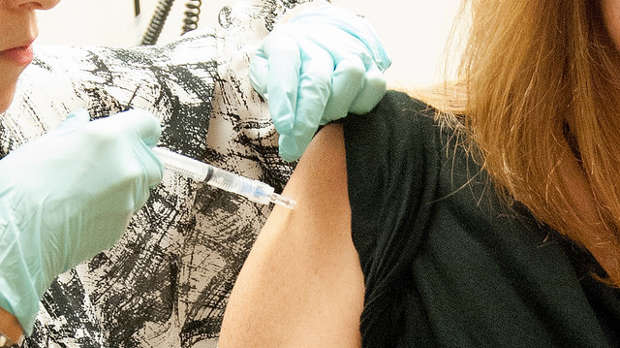
FLICKR, NIAIDVaccinating 212 people, including 54 elderly folks, researchers have identified molecular signatures in blood samples that could predict, with 80-percent accuracy, whether the seasonal flu vaccine would elicit significant immune protection. The study, published yesterday (December 15) in Immunity, could pave the way for more-effective vaccines, according to the researchers.

“We provide novel evidence of a potential connection between the baseline state of the immune system in the elderly and reduced responsiveness to vaccination,” coauthors Shankar Subramaniam of the University of California, San Diego, and Bali Pulendran of Emory University said in a press release. “By providing a more complete picture of how the immune system responds to vaccination, our findings may help guide the development of next-generation vaccines that offer long-lasting immunity and better protection of at-risk populations.”

The researchers combined their results on 212 vaccinated individuals with previously published data for 218 subjects, finding that, within a week of vaccination, young people had high levels of B cells, while elderly individuals had high levels of NK cells, as well as of monocytes, which ...

Interested in reading more?

Become a Member of

The Scientist Logo
Receive full access to more than 35 years of archives, as well as TS Digest, digital editions of The Scientist, feature stories, and much more!
Already a member? Login Here

Related Topics

Meet the Author

  • Jef (an unusual nickname for Jennifer) got her master’s degree from Indiana University in April 2009 studying the mating behavior of seahorses. After four years of diving off the Gulf Coast of Tampa and performing behavioral experiments at the Tennessee Aquarium in Chattanooga, she left research to pursue a career in science writing. As The Scientist's managing editor, Jef edited features and oversaw the production of the TS Digest and quarterly print magazine. In 2022, her feature on uterus transplantation earned first place in the trade category of the Awards for Excellence in Health Care Journalism. She is a member of the National Association of Science Writers.

    View Full Profile
Share
December digest cover image of a wooden sculpture comprised of multiple wooden neurons that form a seahorse.
December 2025, Issue 1

Wooden Neurons: An Artistic Vision of the Brain

A neurobiologist, who loves the morphology of cells, turns these shapes into works of art made from wood.

View this Issue
Stacks of cell culture dishes, plates, and flasks with pink cell culture medium on a white background.

Driving Innovation with Cell Culture Essentials

Merck
Stacks of cell culture dishes, plates, and flasks with pink cell culture medium on a white background.

Driving Innovation with Cell Culture Essentials

MilliporeSigma purple logo
Abstract wireframe sphere with colorful dots and connecting lines representing the complex cellular and molecular interactions within the tumor microenvironment.

Exploring the Inflammatory Tumor Microenvironment 

Cellecta logo
An image of a DNA sequencing spectrum with a radial blur filter applied.

A Comprehensive Guide to Next-Generation Sequencing

Integra Logo

Products

brandtech logo

BRANDTECH® Scientific Announces Strategic Partnership with Copia Scientific to Strengthen Sales and Service of the BRAND® Liquid Handling Station (LHS) 

Top Innovations 2026 Contest Image

Enter Our 2026 Top Innovations Contest

Biotium Logo

Biotium Expands Tyramide Signal Amplification Portfolio with Brighter and More Stable Dyes for Enhanced Spatial Imaging

Labvantage Logo

LabVantage Solutions Awarded $22.3 Million U.S Customs and Border Protection Contract to Deliver Next-Generation Forensic LIMS