The Scientist - Home

A rocket launching into space. Scientists sent bacteriophage and bacteria to study their dynamics under microgravity.
| 4 min read
Bacteria incubated with bacteriophages in space accumulated distinct mutations compared to those on Earth, highlighting the effect of microgravity on microbes.

Latest

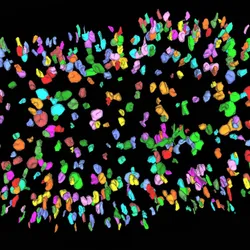
A mouse kidney at birth with the filtering units (nephrons) labelled in different colors by an AI software.

Estrogen Shields Kidneys from Chronic Disease

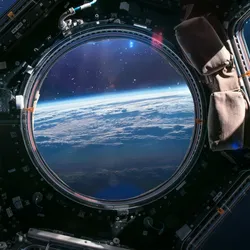
A view of the Earth from the International Space Station, where some human stem cells recently spent up to 45 days. Researchers found these cells aged faster than their earthbound counterparts.

Stem Cells Age Faster in Space

A side profile of Leonardo Zanata, a postdoctoral researcher at CPQBA-UNICAMP, wearing a black t-shirt and holding a mic.

Postdoc Portrait: Leonardo Zanata

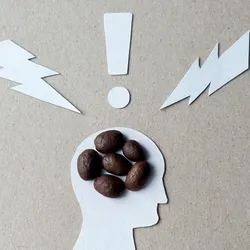
Image of a cutout silhouette of a person’s profile with six coffee beans clustered in their head. There are cutout shapes of two lightning bolts and an exclamation point above their head.

How Does Caffeine Wake People Up?

Image of a woman facing out of an open car window. She has one hand on the car and one hand covering her mouth. She appears carsick.

Cheerful Music Can Help Soothe Car Sickness

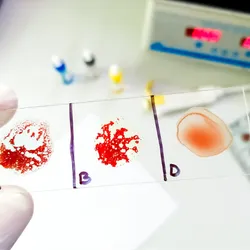
A gloved hand holding a slide containing an agglutination test for AB negative rare blood group.

What Does a Rare Blood Type Mean?

Blue bacterial cells next to their mirror microbe counterparts indicating mirror microbes.

Mirror Microbes: Understanding the How and Why of Hypothetical Life

A photo of UCLA campus with students. With recent funding cuts targeting UCLA, researchers are worried about students’ futures.

Frozen Grants, Canceled Futures: The Human Toll of UCLA’s Research Suspension

Dhruvam Pandey, a postdoctoral researcher at The College of Optics and Photonics, wears a plaid shirt and smiles gently at the camera.

Postdoc Portrait: Dhruvam Pandey

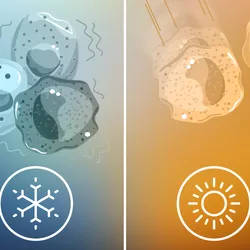
Illustration depicting how environmental changes affect the immune system. On the left, cold temperatures slow the immune system down, and cells are less active. On the right, warm weather promotes immune system activity.

Why Does the Immune System Struggle When the Weather Changes?

A venomous purple-spotted pit viper perched on a tree branch.

AI Unlocks Antibiotic Potential in Deadly Venoms

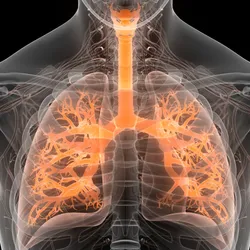
Illustration of a transparent human torso with the respiratory tract and alveoli highlighted in light orange to indicate asthma.

Obesity-Associated Asthma Has a Dietary Source

Image of a man in a laboratory looking frustrated with his failed experiment.
February 2026

A Stubborn Gene, a Failed Experiment, and a New Path

When experiments refuse to cooperate, you try again and again. For Rafael Najmanovich, the setbacks ultimately pushed him in a new direction.

View this Issue

Human-Relevant In Vitro Models Enable Predictive Drug Discovery

Advancing Drug Discovery with Complex Human In Vitro Models

Stemcell Technologies
Redefining Immunology Through Advanced Technologies

Redefining Immunology Through Advanced Technologies

Ensuring Regulatory Compliance in AAV Manufacturing with Analytical Ultracentrifugation

Ensuring Regulatory Compliance in AAV Manufacturing with Analytical Ultracentrifugation

Beckman Coulter logo
Conceptual multicolored vector image of cancer research, depicting various biomedical approaches to cancer therapy

Maximizing Cancer Research Model Systems

bioxcell

Products

Sino Biological Logo

Sino Biological Pioneers Life Sciences Innovation with High-Quality Bioreagents on Inside Business Today with Bill and Guiliana Rancic

Sino Biological Logo

Sino Biological Expands Research Reagent Portfolio to Support Global Nipah Virus Vaccine and Diagnostic Development

Beckman Coulter

Beckman Coulter Life Sciences Partners with Automata to Accelerate AI-Ready Laboratory Automation

Refeyn logo

Refeyn named in the Sunday Times 100 Tech list of the UK’s fastest-growing technology companies