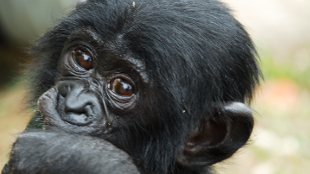
 WIKIMEDIA, PIERRE FIDENCIAs Emory University primatologist Frans de Waal told The Verge, “‘animal emotion’ used to be a dirty word.” But in a study published today (October 15) in Proceedings of the National Academy of Sciences, de Waal and his Yerkes National Primate Research Center colleague Zanna Clay show that juvenile bonobos (Pan paniscus) can form friendships and express concern for one another, providing support for the idea that apes are capable of advanced social and emotional skills.
“The main conclusion of our study [is] that emotion regulation (self-control, managing extreme emotional states) is essential for a well-integrated social life,” de Waal told the Motherboard blog. “The individuals who are better at this are also the ones with most friends and with most empathy for their friends.”
De Waal and Clay studied the development of what they called “socio-emotional competence” among young bonobos at a sanctuary in the Democratic Republic of the Congo, noting how the animals reacted to stressful events—either in which they were directly affected or in which they witnessed the distress of others. The researchers found that bonobos consoled stressed individuals via calming body contact, and that animals reared by their own mothers were more likely to console others than ...