Discoverer of G Proteins Dies

Nobel laureate Alfred Gilman has passed away at age 74.

Written byKerry Grens
| 1 min read

Register for free to listen to this article
Listen with Speechify
0:00
1:00

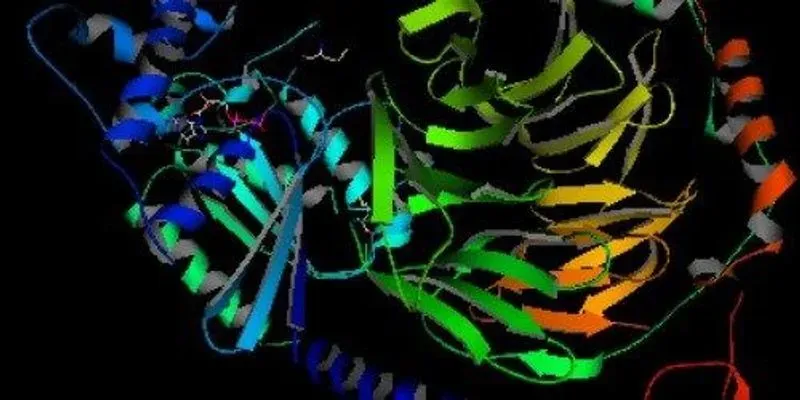
WIKIPEDIA, S. JANICHENAlfred Gilman, who discovered cellular signal transducers known as G proteins, died December 23 of pancreatic cancer. He was 74.

“The mechanism that he found explains how many drugs act, it explains how many hormones act and it basically explains how the body responds to its environment,” Michael Brown, Gilman’s colleague at the University of Texas (UT) Southwestern Medical Center, told the Associated Press.

Gilman was at the University of Virginia in 1980 when he identified the first G protein after using it to restore defecting signaling in mutant leukemia cells. The accomplishment earned him the 1994 Nobel Prize in Medicine or Physiology, alongside Martin Rodbell.

In 1981, Gilman moved to UT Southwestern, where he stayed until 2009, when took on the position of chief scientific officer for the Cancer Prevention and Research Institute of Texas (CPRIT). Three years later, Gilman resigned, concerned about the ...

Interested in reading more?

Become a Member of

The Scientist Logo
Receive full access to more than 35 years of archives, as well as TS Digest, digital editions of The Scientist, feature stories, and much more!
Already a member?
Add The Scientist as a preferred source on Google

Add The Scientist as a preferred Google source to see more of our trusted coverage.

Meet the Author

  • kerry grens

    Kerry served as The Scientist’s news director until 2021. Before joining The Scientist in 2013, she was a stringer for Reuters Health, the senior health and science reporter at WHYY in Philadelphia, and the health and science reporter at New Hampshire Public Radio. Kerry got her start in journalism as a AAAS Mass Media fellow at KUNC in Colorado. She has a master’s in biological sciences from Stanford University and a biology degree from Loyola University Chicago.

    View Full Profile

Related Topics

Related articles background image
August 2026 Digest cover
August 2026

Epic Fail: Sea-Monkeys Sabotage Fieldwork

When Barry Hicks set out to photograph thrombolites, thousands of unexpected visitors photobombed his underwater images.

View this Issue
Overcoming Immunotherapy Resistance in Liver Cancer

Overcoming Immunotherapy Resistance in Liver Cancer

Axion Biosystems
Optimizing NGS Library Preparation for Reliable Sequencing Data

Optimizing NGS Library Preparation for Reliable Sequencing Data

Covaris
Using TCR Repertoire Sequencing to Advance Immunology Research

Using TCR Repertoire Sequencing to Advance Immunology Research

Miltenyi
Mapping Clonal Mosaicism in Aging Tissues

Mapping Clonal Mosaicism in Aging Tissues

Mission bio

Products

Sino Biological Logo

Sino Biological Launches SuperNuclease ® Pro with Free Trial Program

Sino Biological Logo

Sino Biological Launches Precisely Characterized Full-Length p-Tau217 Protein to Advance Next-Generation Alzheimer’s Biomarker Assay Development

A photo of a scientist placing the Resipher device on a 96-well plate.

Resipher: Continuous Live-Cell Mitochondrial Respiration Monitoring in 96-Well Plates

Lucid Scientific logo
Conceptual image of ice and frost.

The VAULT100 PRO: Inside the most advanced Stirling Ultracold ULT freezer ever built.

Stirling Ultracold logo