



CRISPR-based therapy is a transformative approach to medicine that allows for targeted changes to the genome by directly addressing the source of disease, or to the epigenome through silencing of defective genes. CRISPR-based therapies have the potential to revolutionize medicine by offering highly effective, specific, and durable solutions to a breadth of diseases, treating millions of people around the world. However, early CRISPR medicines have continued to face safety and activity hurdles.

Benjamin Oakes, PhD
Co-founder, President, and Chief Executive Officer
Scribe Therapeutics
Scribe Therapeutics has engineered novel CRISPR molecules with specific therapeutic characteristics. Their “CRISPR by Design” approach focuses on engineering bacterial immune systems into genome and epigenome editing technologies to make therapies with a greater therapeutic index. In this Innovation Spotlight, Benjamin Oakes, co-founder, president and chief executive officer at Scribe discusses how such therapies are more potent and safer for use even as standard of care treatments for highly prevalent diseases like cardiometabolic disease.
What are the advantages of epigenome editing?
Editing the epigenome enables modification of a gene’s expression without permanently changing the underlying DNA. Therefore, epigenome editing is a powerful way to control the expression of disease-associated genes while preserving the genomic sequence. We believe this will be an immensely valuable and potentially safer approach for treating many diseases. At Scribe, we have built both genome and epigenome editing platforms, and with both technologies in-house we can choose the right tools for the job to create durable treatments for a wide range of cardiometabolic disease risk factors. For example, Scribe’s STX-1150 epigenetic editor is under development for lowering low-density lipoprotein cholesterol (LDL-C), a key driver of atherosclerotic cardiovascular disease.
What are the safety and efficacy considerations for CRISPR-based therapies?
Natural CRISPR systems evolved as immune defenses in microbes, not for use in humans. As such, they are adapted to function in smaller genomes, where less potency and specificity are required. This evolutionary context has resulted in gene editing tools that often lack the precision and robustness needed to safely and effectively edit the human genome. Yet, most existing CRISPR tools and therapies still rely on first-generation Cas9 systems that use primarily unmodified, natural CRISPR proteins. Consequently, these technologies have shown variable success in achieving high on-target activity at therapeutic sites.
To ensure CRISPR-based drugs are both effective and safe, these systems must be optimized to enhance potency—allowing lower effective doses while still delivering the desired outcomes. Equally important is high specificity, meaning CRISPR proteins must minimize off-target effects to prevent unintended genetic changes with potentially serious safety implications.
At Scribe, we champion the principle that intentional, iterative engineering is essential to developing CRISPR-based therapies that are potent, precise, and ultimately suitable for widespread standard-of-care use in large patient populations.
What technologies are you most excited about? How are they advancing CRISPR-based genome therapeutics?
Next-generation gene and epigenetic editing technologies are just beginning to demonstrate their impact. Scribe leverages the CRISPR molecule CasX, a novel, easy-to-deliver, and safer starting point, to drive two groundbreaking technologies that we believe are safe, specific, and potent enough to become standard-of-care medicines.
Our X-Editor (XE) is a next-generation genome editing technology that is the first of its kind to achieve saturating levels of editing in the non-human primate liver with no detectable off-targets. We have demonstrated that engineering can yield greater than 100x improvements in activity while maintaining no detectable off-target editing at doses 10-fold higher than the effective dose. At the recent American Heart Association Scientific Sessions conference, we reported that XE safely reduced triglyceride levels by more than 90 percent in vivo.
Our Epigenetic Long-Term X-Repressor (ELXR) technology is designed to modify the epigenome by turning off gene expression without modifying the underlying genetic sequence. ELXR enables durably effective gene silencing, offering a revolutionary new approach to therapy. We recently presented data at the European Atherosclerosis Society Congress that our novel epigenetic silencer can reduce LDL-C levels by more than 50 percent for at least 9 months in non-human primates, surpassing current standard of care therapies for lowering LDL-C.

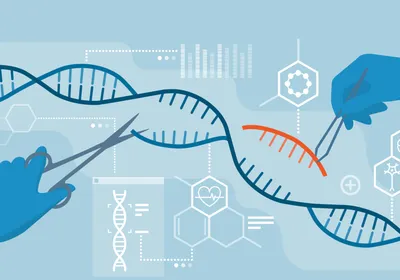
Epigenomic editing is a powerful tool for targeting the underlying drivers of cardiometabolic disease, by tweaking gene expression while avoiding permanent DNA alterations.
iStock, Marisvector
What are some examples of diseases that have been successfully treated using CRISPR therapy?
CRISPR-based therapies have already been approved to treat conditions such as sickle cell disease and beta thalassemia, where patients stand to benefit from durable gene editing to restore healthy blood cell production. These are proven ex vivo treatments, meaning that a patient’s cells are removed, edited outside of the body, and then reintroduced into the patient’s body for the therapy to take effect.
The next step for our field is to take these potentially curative medicines in vivo and treat the root cause of a disorder directly inside of the body. At Scribe, advancing in vivo medicine is a key focus, both internally as well as via collaborations with leading pharmaceutical partners, including Sanofi and Lilly, to develop CRISPR-based therapeutics for a range of disease targets. We are currently working with Sanofi on an in vivo approach for treating sickle cell disease, and we have recently announced the achievement of a success milestone for another target in our in vivo program with Sanofi.
Can you provide an example of one of the most promising disease areas that scientists are pursuing for future CRISPR-based therapy?
The disease area we are most focused on, and one we believe holds tremendous promise, is cardiovascular and cardiometabolic disease. This is currently the leading cause of death worldwide, affecting millions of people, and despite receiving less attention compared to diseases like cancer, cardiovascular disease is nearly twice as deadly on a global scale. Over the next decade alone, an estimated 500 million new cases are expected.
Current treatments still face significant challenges, including limited effectiveness, safety concerns, and the considerable burden of treatment adherence. Most people struggle to consistently take daily or weekly medications for decades, especially when multiple treatments are involved. Consequently, patients miss doses or discontinue treatments altogether, leading to outcomes that fall significantly short of what's known to be achievable.
The burden this creates is enormous for patients, caregivers, clinicians, and healthcare systems. This reality makes cardiometabolic disease a promising disease area where even a handful of highly safe and effective CRISPR-based medicines could dramatically improve millions of lives.
What excites you most about the future potential of genome and epigenome editing?
My team and I at Scribe are deeply committed to solving cardiometabolic disease with CRISPR-based therapies. We believe that within the next decade, we can deliver therapeutics capable of cutting the rate of atherosclerotic cardiovascular disease in half, if deployed broadly. That mission drives everything we do.











