The Scientist - Home

A rocket launching into space. Scientists sent bacteriophage and bacteria to study their dynamics under microgravity.
| 4 min read
Bacteria incubated with bacteriophages in space accumulated distinct mutations compared to those on Earth, highlighting the effect of microgravity on microbes.

Latest

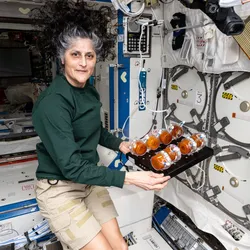
Astronaut Suni Williams displays production packs containing genetically engineered yeast and edible media for incubation to activate yeast growth.

Designer Microbes Aid Space Exploration Efforts

An abstract illustration that represents brain-computer interface, showing an arm and a robotic hand pointing at a human brain from opposite sides.

Brain-Computer Interface Lets Users Communicate Using Thoughts

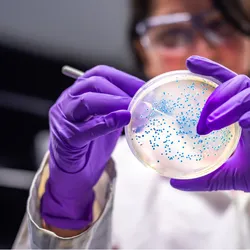
A scientist in a microbiology laboratory working with an Agar plate that has a few blue colonies.

Viral Enzyme Accelerates Evolution of Therapeutic Proteins

Cartoon close-up of a human face with the nose and lips in frame. There are boils on the top left part of the lip, indicating a cold sore breakout.

Herpes Hijacks a Host Enzyme. Blocking It Could Prevent Cold Sores.

Top view of office space shows hands on the desktop holding a tablet and charts, diagrams, graphs on a surrounding paper, indicating preparation for grant submission.

An NIH Reviewer Offers Grant-Writing Tips

A looping spiral of genomic code. Researchers used genomic analysis to determine a predictive obesity score.

Gene Score Predicts Obesity, Even in Young Children

Two mice in a dark tunnel.

Was Lamarck Right? Reviving a Dead Theory of Evolution

A mother breastfeeding her baby. Antibodies in the breastmilk shape the baby’s immune responses.

Breastmilk Antibodies Shape the Infant Immune System

A girl holds her throat with her left hand. The region where the vocal cords would be is glowing red, indicating some strain, or even voice box cancer, which an AI-based tool may help detect.

AI Scans Audio Recordings to Detect Voice Box Cancer 

Multiple dinosaurs walk across a lush valley landscape. Several pterosaur-like creatures roam the sky, and two trees frame the image, as a hill looms in the background.

Why Were Dinosaurs So Big?

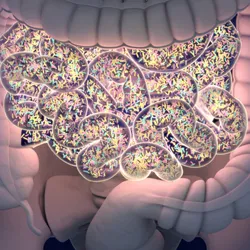
3D illustration of a transparent human abdomen with the large and small intestine visible. The small intestine appears to have a light emanating from within it and is full of yellow, blue, and pink microbes. This image is highlighting the role of the gut microbiome in chronic pain.

Gut Microbes Cause Fibromyalgia-Like Symptoms in Mice

Image of a man sleeping in bed.

How a Nap Can Boost Memory and Performance

Image of a man in a laboratory looking frustrated with his failed experiment.
February 2026

A Stubborn Gene, a Failed Experiment, and a New Path

When experiments refuse to cooperate, you try again and again. For Rafael Najmanovich, the setbacks ultimately pushed him in a new direction.

View this Issue

Human-Relevant In Vitro Models Enable Predictive Drug Discovery

Advancing Drug Discovery with Complex Human In Vitro Models

Stemcell Technologies
Redefining Immunology Through Advanced Technologies

Redefining Immunology Through Advanced Technologies

Ensuring Regulatory Compliance in AAV Manufacturing with Analytical Ultracentrifugation

Ensuring Regulatory Compliance in AAV Manufacturing with Analytical Ultracentrifugation

Beckman Coulter logo
Conceptual multicolored vector image of cancer research, depicting various biomedical approaches to cancer therapy

Maximizing Cancer Research Model Systems

bioxcell

Products

Sino Biological Logo

Sino Biological Pioneers Life Sciences Innovation with High-Quality Bioreagents on Inside Business Today with Bill and Guiliana Rancic

Sino Biological Logo

Sino Biological Expands Research Reagent Portfolio to Support Global Nipah Virus Vaccine and Diagnostic Development

Beckman Coulter

Beckman Coulter Life Sciences Partners with Automata to Accelerate AI-Ready Laboratory Automation

Refeyn logo

Refeyn named in the Sunday Times 100 Tech list of the UK’s fastest-growing technology companies