


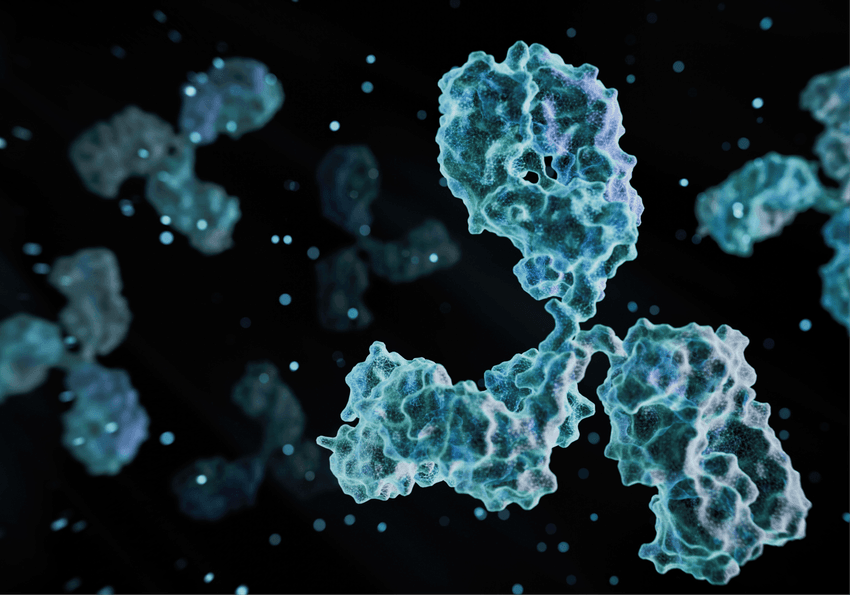
Functional antibodies are important research tools, as they can drive numerous physiological and pathological mechanisms.
©iStock, koto_feja
Antibodies are most well-known for their ability to recognize and bind specific antigens—a property that has made them indispensable for both the laboratory and clinic. However, antibodies are not mere labels but are also capable of eliciting targeted biological effects. Indeed, their effector capabilities have been known since their discovery in the late 19th century by Paul Ehrlich as neutralizing agents against toxins.1
“Functional antibody” is a popular term used to distinguish antibodies with effector activity from those employed as biologically inert labels. That said, the term is not well defined. Broadly, a functional antibody is one that actively modulates a biological process within a living organism. These processes span a wide breadth of mechanisms, from cellular activation and inactivation to agent neutralization and pathway signaling.1
What Functional Antibodies Can Do
Functional antibodies are versatile agents that play key roles in many major biological processes. For example, the T cell activation pathway relies on antigen presentation to the T cell receptor/CD3 complex. As such, scientists have used anti-CD3 antibodies as agonists to overcome immunosuppression and rescue T cell activation.2 Alternatively, inhibitory antibodies can also target these types of interactions to shut down biological mechanisms. As just one instance, an anti-PD-1 antibody can prevent the PD-1/PD-L1 interaction that would normally inhibit tumor cell killing by deactivating effector T cells.3
Although pathway targeting has grown in popularity over the last few decades, scientists still turn to antibodies for the neutralizing capability that led to Ehrlich’s initial discovery. Antibodies neutralize both self and foreign biomolecules by binding to their biologically active regions, preventing them from interacting with other entities. Potential targets for neutralizing antibodies include toxins, cytokines, and pathogens including viruses, bacteria, and parasites. Critically, the presence of neutralizing antibodies is a major factor in the effectiveness of post-immunization immune responses.4
Finally, functional antibodies can also mediate cell signaling through Fcγ receptor (FcγR) pathways. This activity is predominantly found in immune cells, with antibody-mediated FcγR activation linked to the promotion of phagocytosis and upregulation of pro-inflammatory cytokine and chemokine expression in leukocytes, as well as dendritic cell activation and B cell selection, survival, and antibody production mechanisms.5 The applications of functional antibodies in research are far reaching, including in cancer treatment development to improve anti-tumor immune system activity.
Ensuring Quality When Working with Functional Antibodies
In disease research, scientists do not just employ antibodies for detecting and measuring targets of interest. They also harness their functional capabilities to induce pathological phenomena or to modulate disease pathways, with the ultimate goal of learning how to attenuate, abrogate, or reverse these mechanisms.
Antibody quality is important for ensuring data integrity and reproducibility. Insufficient antibody selectivity has been shown to cause setbacks and delay research projects, ultimately hampering drug development.6 This is especially important when working with functional antibodies, as discrepancies in antibody purity and specificity can significantly alter the nature and magnitude of elicited responses. Further, other confounding factors such as the presence of preservatives, contaminants, and/or antibody aggregation during either production or storage can also affect in vivo activity.
Bio X Cell antibodies, including InVivoMAb™ and InVivoPlus™ antibody product lines, undergo rigorous testing to confirm purity and freedom from endotoxin contamination. InVivoPlus™ antibodies are further examined for binding specificity and aggregation. Perhaps most importantly, Bio X Cell provides specific isotype controls for InVivoMAb™ and InVivoPlus™ antibodies. Isotype controls are important when working with functional antibodies to determine the effects of specific versus non-specific FcγR signaling, as well as any other potential non-specific effects stemming from differences in host species, isotype, and subclass.
Functional antibodies are vital research tools, can help create new disease models, and hold tremendous therapeutic potential. However, high-quality tools such as Bio X Cell’s InVivoMAb™ and InVivoPlus™ antibodies are needed to ensure data integrity and reproducibility for in vivo and translational research.
- Daëron, M. The effector functions of antibodies. Immunol Rev. 2024;328:6-12.
- Menon AP, et al. Modulating T cell responses by targeting CD3. Cancers (Basel). 2023;15(4):1189.
- Gravbrot N, et al. Therapeutic monoclonal antibodies targeting immune checkpoints for the treatment of solid tumors. Antibodies (Basel). 2019;8(4):51.
- Zhang A, et al. Beyond neutralization: Fc-dependent antibody effector functions in SARS-CoV-2 infection. Nat Rev Immunol. 2023;23:381-396.
- Bournazos S, et al. Signaling by antibodies: Recent progress. Annu Rev Immunol. 2017;35:285-311.
- Biddle M, et al. Improving the integrity and reproducibility of research that uses antibodies: a technical, data sharing, behavioral and policy challenge. MAbs. 2024;16(1):2323706.













