A T-Cell Tweak Combats Advanced Breast Cancer

The immunotherapy eliminated a woman’s metastatic lesions and kept her disease-free for two years.

Written byAshley Yeager
| 2 min read

Register for free to listen to this article
Listen with Speechify
0:00
2:00
Share

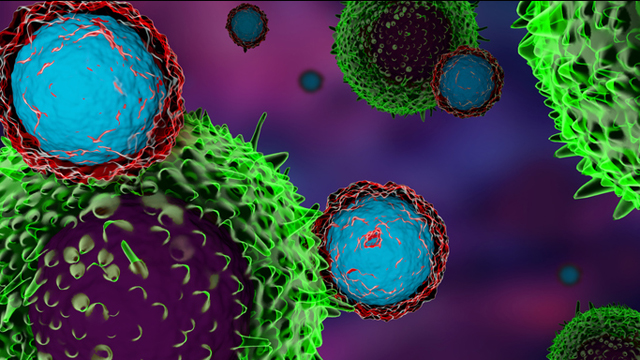
ISTOCK, MELETIOS VERRASReactivating T cells in a woman with metastatic breast cancer eliminated her tumors, researchers report today (June 4) in Nature Medicine. It is the first time late-stage breast cancer has been successfully treated with T-cell immunotherapy.

“We’re looking for a treatment—an immunotherapy—that can be broadly used in patients with common cancers,” study coauthor Steven Rosenberg, an oncologist and immunologist at the National Cancer Institute (NCI), tells NPR. The result suggests this type of treatment might be possible for other types of solid tumors, including in the colon, rectum, and pancreas.

To develop the treatment, Rosenberg and his colleagues used whole-exome and RNA sequencing to identify point mutations within the genome of a patient’s breast tumor and then isolated tumor-infiltrating lymphocytes from the mass and identified which ones were reactive against mutations in the genes SLC3A2, ECPAS, CADPS2, and CTSB, which were present in her tumor. The researchers then infused into the patient roughly 90 billion tumor-infiltrating lymphocytes that targeted the four ...

Interested in reading more?

Become a Member of

The Scientist Logo
Receive full access to more than 35 years of archives, as well as TS Digest, digital editions of The Scientist, feature stories, and much more!
Already a member? Login Here

Related Topics

Meet the Author

  • Ashley started at The Scientist in 2018. Before joining the staff, she worked as a freelance editor and writer, a writer at the Simons Foundation, and a web producer at Science News, among other positions. She holds a bachelor’s degree in journalism from the University of Tennessee, Knoxville, and a master’s degree in science writing from MIT. Ashley edits the Scientist to Watch and Profile sections of the magazine and writes news, features, and other stories for both online and print.

    View Full Profile
Share
Illustration of a developing fetus surrounded by a clear fluid with a subtle yellow tinge, representing amniotic fluid.
January 2026, Issue 1

What Is the Amniotic Fluid Composed of?

The liquid world of fetal development provides a rich source of nutrition and protection tailored to meet the needs of the growing fetus.

View this Issue
Skip the Wait for Protein Stability Data with Aunty

Skip the Wait for Protein Stability Data with Aunty

Unchained Labs
Graphic of three DNA helices in various colors

An Automated DNA-to-Data Framework for Production-Scale Sequencing

illumina
Exploring Cellular Organization with Spatial Proteomics

Exploring Cellular Organization with Spatial Proteomics

Abstract illustration of spheres with multiple layers, representing endoderm, ectoderm, and mesoderm derived organoids

Organoid Origins and How to Grow Them

Thermo Fisher Logo

Products

Brandtech Logo

BRANDTECH Scientific Introduces the Transferpette® pro Micropipette: A New Twist on Comfort and Control

Biotium Logo

Biotium Launches GlycoLiner™ Cell Surface Glycoprotein Labeling Kits for Rapid and Selective Cell Surface Imaging

Colorful abstract spiral dot pattern on a black background

Thermo Scientific X and S Series General Purpose Centrifuges

Thermo Fisher Logo
Abstract background with red and blue laser lights

VANTAstar Flexible microplate reader with simplified workflows

BMG LABTECH