Ebola Vaccines Protect Monkeys

Two new Ebola vaccine candidates prove safe and effective against the virus in macaques, a study shows.

Written byJef Akst
| 1 min read

Register for free to listen to this article
Listen with Speechify
0:00
1:00
Share

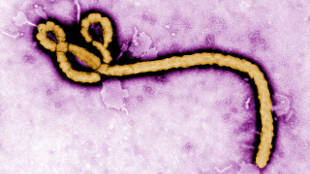
FLICKR, CDC GLOBALWhile a handful of Ebola vaccines are being trialed in humans, researchers are continuing to bring refined options up through the preclinical pipeline. A study published this week (April 8) in Nature provides evidence of the safety and efficacy of two novel vaccine candidates in macaque monkeys. Human safety trials could begin as early as this summer, senior author Thomas Geisbert of the University of Texas Medical Branch in Galveston told The New York Times.

The new vaccine candidates, under development by Profectus BioSciences, are improvements on a Merck vaccine currently being tested in Liberia; they used a more attenuated version of the vesicular stomatitis virus vector. While the vaccine that’s currently in trials can cause fever and joint and muscle pain, these new vaccines appeared to cause no side effects in eight vaccinated monkeys. Importantly, all eight animals survived a challenge with a virus from the current Ebola outbreak 28 days after immunization, while two control monkeys—which did not receive a vaccine—both died within a week, suggesting the more attenuated versions of the vector did not diminish the vaccines’ protection.

“[W]e are trying to find the balance between efficacy and safety,” Geisbert told Time.

Interested in reading more?

Become a Member of

The Scientist Logo
Receive full access to more than 35 years of archives, as well as TS Digest, digital editions of The Scientist, feature stories, and much more!
Already a member? Login Here

Related Topics

Meet the Author

  • Jef (an unusual nickname for Jennifer) got her master’s degree from Indiana University in April 2009 studying the mating behavior of seahorses. After four years of diving off the Gulf Coast of Tampa and performing behavioral experiments at the Tennessee Aquarium in Chattanooga, she left research to pursue a career in science writing. As The Scientist's managing editor, Jef edited features and oversaw the production of the TS Digest and quarterly print magazine. In 2022, her feature on uterus transplantation earned first place in the trade category of the Awards for Excellence in Health Care Journalism. She is a member of the National Association of Science Writers.

    View Full Profile
Share
Image of a woman with her hands across her stomach. She has a look of discomfort on her face. There is a blown up image of her stomach next to her and it has colorful butterflies and gut bacteria all swarming within the gut.
November 2025, Issue 1

Why Do We Feel Butterflies in the Stomach?

These fluttering sensations are the brain’s reaction to certain emotions, which can be amplified or soothed by the gut’s own “bugs".

View this Issue
Olga Anczukow and Ryan Englander discuss how transcriptome splicing affects immune system function in lung cancer.

Long-Read RNA Sequencing Reveals a Regulatory Role for Splicing in Immunotherapy Responses

Pacific Biosciences logo
Research Roundtable: The Evolving World of Spatial Biology

Research Roundtable: The Evolving World of Spatial Biology

Conceptual cartoon image of gene editing technology

Exploring the State of the Art in Gene Editing Techniques

Bio-Rad
Conceptual image of a doctor holding a brain puzzle, representing Alzheimer's disease diagnosis.

Simplifying Early Alzheimer’s Disease Diagnosis with Blood Testing

fujirebio logo

Products

Labvantage Logo

LabVantage Solutions Awarded $22.3 Million U.S Customs and Border Protection Contract to Deliver Next-Generation Forensic LIMS

The Scientist Placeholder Image

Evosep Unveils Open Innovation Initiative to Expand Standardization in Proteomics

OGT logo

OGT expands MRD detection capabilities with new SureSeq Myeloid MRD Plus NGS Panel