The Scientist - Home

Latest

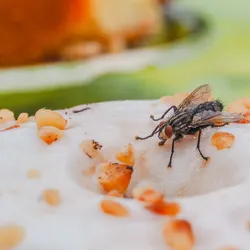
A close-up image of a fly landing on a dessert

What Happens When a Fly Lands on Your Food? 

Red and green small tomatoes. A new genetic engineering approach helped gene-edited plants grow faster.

Gene-Edited Crops Grow Faster with a Little Help from Bacteria

Vector illustration of implanting of brain chips into human head.

Cell-Electronic Hybrid Chips Could Enable Surgery-Free Brain Implants

A picture of Ruth Isenberg, a postdoc at the University of Minnesota.

Postdoc Portrait: Ruth Isenberg

Several miniature brain models, representing human neural organoids, often colloquially called minibrains, are laid out on a light blue surface. The pattern of these organoids seem arrow-like, indicating the future directions of the field that neuroscientists and ethicists envision.

Human Neural Organoid Research Needs Better Regulation

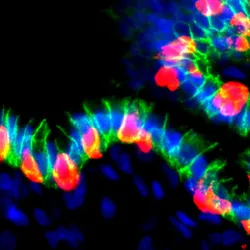
Blue, green, and red dots make a worm-like shape against a black background, signifying human organoids grafted in mice that secreted insulin.

Reprogrammed Human Stomach Organoids Secrete Insulin

Hands collect gear in a puzzle against the sky in the sunset, representing academia-industry partnership.

A Guide to Build Impactful Academia-Industry Partnerships

A picture of Meaghan Kavanagh, a postdoc at the Harvard T.H. Chan School of Public Health.

Postdoc Portrait: Meaghan Kavanagh

A picture of Meryem Talbo, a postdoc at Stanford University.

Postdoc Portrait: Meryem Talbo

Boy lying in bed with a stomachache, signifying gastroenteritis caused due to human astroviruses.

How a Stomach Flu-Causing Virus Sneaks into Human Cells

Image of Tatsuya Nobori. He smiles at the camera and wears a black shirt underneath a brown jacket. There are computer monitors in the background that depict colorful images.

Living Maps: Uncovering the Spatial Biology of Plants

A mouse wears big blue headphones over its ears.

Chronic Noise Exposure Led to Parkinson's Disease Symptoms in Mice

Illustration of a developing fetus surrounded by a clear fluid with a subtle yellow tinge, representing amniotic fluid.
January 2026, Issue 1

What Is the Amniotic Fluid Composed of?

The liquid world of fetal development provides a rich source of nutrition and protection tailored to meet the needs of the growing fetus.

View this Issue

Skip the Wait for Protein Stability Data with Aunty

Skip the Wait for Protein Stability Data with Aunty

Unchained Labs
Graphic of three DNA helices in various colors

An Automated DNA-to-Data Framework for Production-Scale Sequencing

illumina
Exploring Cellular Organization with Spatial Proteomics

Exploring Cellular Organization with Spatial Proteomics

Abstract illustration of spheres with multiple layers, representing endoderm, ectoderm, and mesoderm derived organoids

Organoid Origins and How to Grow Them

Thermo Fisher Logo

Products

nuclera logo

Nuclera eProtein Discovery System installed at leading Universities in Taiwan

Brandtech Logo

BRANDTECH Scientific Introduces the Transferpette® pro Micropipette: A New Twist on Comfort and Control

Biotium Logo

Biotium Launches GlycoLiner™ Cell Surface Glycoprotein Labeling Kits for Rapid and Selective Cell Surface Imaging

Colorful abstract spiral dot pattern on a black background

Thermo Scientific X and S Series General Purpose Centrifuges

Thermo Fisher Logo